Showing posts with label Tough Ombres. Show all posts

Saturday, June 1, 2013

A Medic's Story


   Following is an excerpt from "A Medic's Story," by Edward Madden, as told to me during a 2000 interview at the 90th Infantry Division reunion in Charlotte, North Carolina. "A Medic's Story" is available for Kindle for $1.99 at amazon.com. 
 
   After the Normandy peninsula was cut off, they put us into a holding position and we were put onto this farm. We were there for almost two weeks, in a holding position. And one day, July the 1st, the Germans decided they were going to put some artillery into the place.
   There were two girls who lived on the farm. One was 14 or 15, and her sister was 16 or 17. They were out in the field, milking the cows at about 5 o’clock in the afternoon, when the Germans put the shells in there. The shells landed real close to them, and a couple of the cows were killed, and some of the shrapnel went through the older sister’s heart and killed her. And the younger girl had both of her legs taken off below the knee, both of them, and one of her arms was pretty badly shattered. And I went out and picked her up and brought her into their house. I treated her, then I called and had her evacuated back.
   The very next day we moved out, and I never heard anything about her until later on in the year, in December or so, the Stars & Stripes came out and there was an article in it showing her with Air Corps people. And what they did was they came in, and they built a landing strip right near the farm. They found out about her, so they went back to the Army hospital that they had her in, and the Air Force took her out of there – with permission – and they brought her back to the farm and they built a tent for her. They had their doctors take care of her, and eventually they ended up buying her prostheses for her legs.
   When the Air Corps – these were fighter planes, P-47s – moved forward to keep up with the infantry, they were able to carry her in their planes because they got written permission from General Eisenhower to take her with them. And she met Eisenhower, he came over and talked to her.
   I sent the article home, and I didn’t think anything about it.
  Then in 1985, when I was going to go to Europe, I wrote to Henri Levaufre [a Normandy historian who has assisted many 90th Division veterans] and I told him about her and asked him to find out if the woman is still alive. He wrote back to me and he said, yes, he found her, that she lives only a few miles from where Henri lived. So he said when you get to the hotel – we told him what hotel in Paris we were going to be at – he said he would leave a message for me so I’d know where she lives. So when we got into Paris we got a message stating that her daughter – without the legs but with the artificial limbs; she married a lawyer, and she had one daughter, and the daughter was going to come by in the morning and pick us up and take us to the big hospital in Paris where they take care of the people. So they took us over and we met for the first time. And she didn’t know that it was the infantry that was stationed at her farm – she didn’t remember that it was infantry, she thought there were artillery people, and she didn’t know who I was or that I had taken care of her until I explained to her; I told her that one day one of our officers was going through their barn, and he moved some hay aside and he found a German motorcycle that her brother had hidden, that he’d stolen from the Germans. I told her about that and she said, “Oh, my God, you were there, on the farm.”
   And I said, “Yes, I was the one that took care of you.”
   Well, with all of this the Air Force had adopted her and they’ve had her come over to some of their reunions. And if you ever go to the Airborne Museum in Ste. Mere Eglise, they have a whole display about her there.
   I met her in 1985, and then when I went over in 1994 we stayed with her at her home for a few days and she took us around and she introduced us to the curator of the museum at Ste. Mere Eglise.
   Her name is Yvette Hamel. Incidentally, there’s a book, one of the fliers, he’s a doctor now, his wife met her and his wife wrote a book about her called “Sunward I’ve Climbed,” and it’s been translated into French, too. It’s an interesting book. I’ve got it. She sent me a copy, signed and all.
 

Friday, January 18, 2013

Oberwampach, Jan. 18-19, 1945

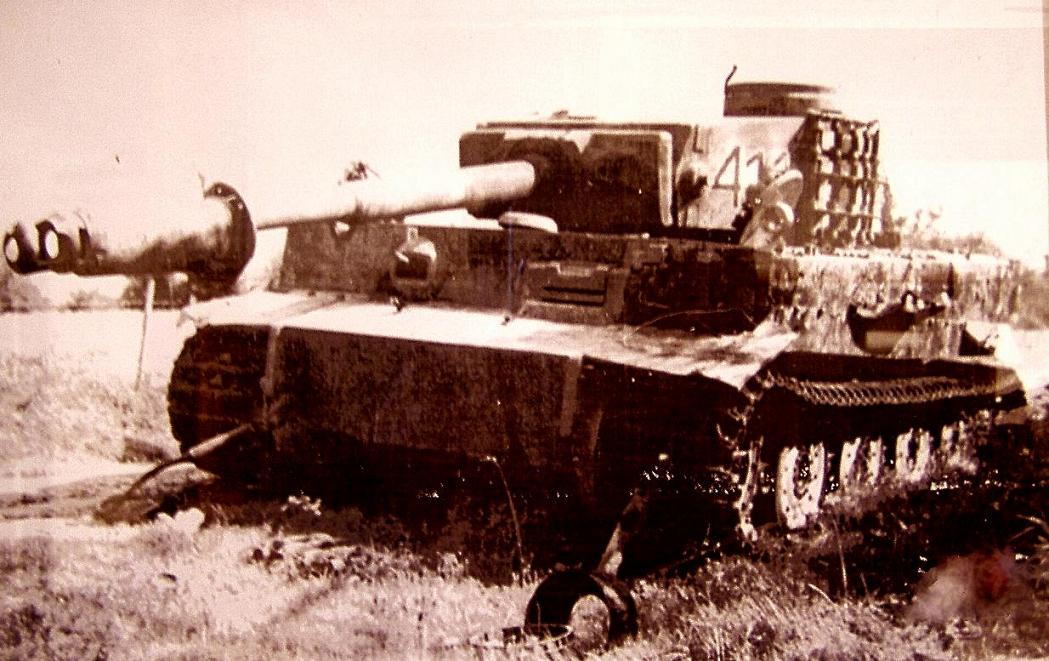
A knocked-out Tiger tank at Oberwampach, Luxembourg

Oberwampach
 
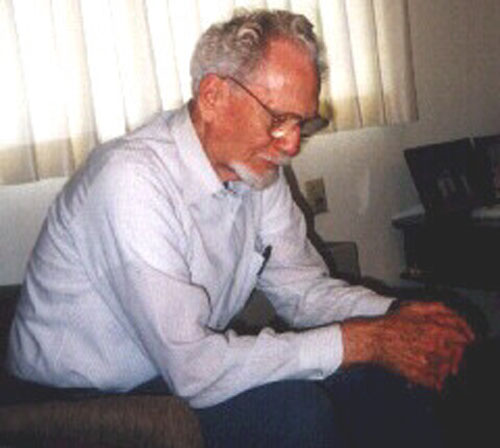
In 1936, Arnold Brown left his home in Cronos, Ky., with 50 cents in his pocket and an eighth-grade education, hopped a freight train, and enlisted in the Army. He was 18 years old. When I interviewed him in 1997, he was 80 years old, a retired colonel, and living in Owensboro, Ky.
During the battle of the Bulge, he was a captain in command of Company C of the 358 Regiment of the 90th Infantry Division. This is his story of the battle of Oberwampach, as told to Aaron Elson.


Arnold Brown, in Owensboro, Ky.

Arnold Brown


   The Battle of the Bulge began on December the 16th, when Von Runstedt started his assault.
   We were across the Saar River in Dillingen, and they decided that our position was vulnerable so they had us withdraw under cover of darkness. It was cold, with a freezing rain. We withdrew and occupied a position on land between the Moselle and the Saar rivers, and that’s where we had our Christmas dinner. Then we got orders to move and join the battle in Luxembourg, the Battle of the Bulge.
   We loaded on trucks and went up through those mountains, in the freezing cold.
   My first operation in the Battle of the Bulge was in the village of Niederwampach.
   A and B Company had attacked Niederwampach and were held up, so I was told to go around the left flank and attack from the rear. In a position such as this, I always attacked with two platoons forward and one in support. My position is always in between and slightly to the rear of the two attacking platoons, so I can keep abreast of what’s going on and if I need to commit my support platoon, I’ll know where to do it.
   In approaching Niederwampach, the two platoons split up a little bit, so the part of the village in my immediate front had not been cleared. I entered a building with my command group. When I say command group, that was just myself, my communications sergeant, the radio operator and my messenger. We entered the barn part of this building, and when I entered, I turned around and started to say, "I don’t believe there’s anything in here." There was a platform of hay on the right side. The platform was about waist high, and the hay was a little higher than that, and I saw this hay start to move. So we squared off toward the hay with our weapons, and a German said, "Nicht schiessen! Nicht schiessen!" which meant, "Don’t shoot."
   I said, "Hande ho. Hande ho." Put your hands up. So they put their hands up and came out and surrendered. There must have been 10 or 12 Germans.
   When they surrendered, there was another group of four or five men who came out from the stall behind us, and they surrendered. I heard a commotion over my head and I looked up and I saw there’s a German descending from his rafter, and I noticed that he had hand grenades around his belt, and he came down and surrendered.
   To this day I don’t know why they surrendered. I bring it out just to show you how lucky I was all through combat.
   I had my other platoons clear out the other buildings, and we captured Niederwampach.
   From Niederwampach, we were to go and take Oberwampach, Luxembourg.
   Before we left, the battalion commander informed me that the situation was serious, but it wouldn’t become critical as long as we could prevent the Germans from widening the gaps in our lines. They were sending me into Oberwampach, which was on the shoulder of this breakthrough, with the instruction to hold it at all costs. Don’t let the Germans widen the gap. That was my order.
   In moving across the open fields to get to Oberwampach, we came under machine gun fire from a position on our right front. So I told the radio operator, who’s carrying the SCR300 radio on piggyback right beside me, to call for artillery fire to neutralize this machine gun. This radio operator now is shot through the head and falls dead at my feet while I’m on the transmitter making that message. There are bullets whizzing around.
   We got this accomplished, but instead of getting artillery that time, we had a tank in support, and the tank took care of that machine gun nest.
   Another man picked up the radio for me and we took Oberwampach with very little resistance. It was about dusk, and before I got my security all arranged, a German halftrack towing a 120-millimeter mortar and a crew of 12 had moved into our midst. They moved into one of the buildings. They didn’t know we were there and we didn’t know they had moved in, until I sent my messenger back to one of my platoons, and he went to the building where this platoon had originally been. He opened the door, and it was full of Germans.
   Two platoons were going into position, so I took my other platoon and gave them the mission of knocking out these Germans, and I told everybody in the company to keep their heads down because we’re going to have a fight right in our midst.
   This platoon got in a semicircle around that building, and they opened up on it. They fired a few rifle grenades in it, and when the rocket launchers fired, one of these Germans put up a white flag, and they came out and surrendered. But only six of them surrendered. That’s what the Germans will do sometimes; they’ll surrender some while the others get away, and these other six escaped through the darkness while we stopped shooting.
   Well, these Germans were all 6-foot blonds, and they had Adolph Hitler shoulder patches. They were part of Hitler’s elite guard. In other words, up until this time they had been protecting Hitler’s headquarters, and this is the first time I guess that they had actually been committed to hard fighting.
   So we were literally fighting Hitler’s supermen. All the same blood type, so if they had to have a transfusion they didn’t have to check it out or anything, they’d just take one man to another.
   I questioned them, and found out that they were part of a panzer division that was moving into this area. Based on that information, I asked the battalion commander to send me some more weapons to defend against an armor type attack. He sent me up a platoon of tanks and a platoon of tank destroyers, and I deployed them. And it’s a good thing, because the Germans launched an attack at 3:30 in the morning. If we hadn’t rushed up those tanks and tank destroyers, they would probably have overrun us the first night.
   This position we had moved into gave us observation over one of the main routes the Germans were using that had our troops surrounded at Bastogne. So they sent elements of a panzer division to knock us out, and we ended up in somewhere between a 36 and a 72 hour battle, night and day. When the Germans were not making a ground attack, they were bombarding us with artillery fire and direct tank fire. All of their attacks were at night except one. And this was their last attack; I’ll get into that later.
   When these battles were going on two of my senior platoon sergeants came to me and they said, "Captain, this is the roughest that we’ve ever experienced." One of them said, "I think we had better withdraw; if not we’ll probably have to surrender."
   And I had to tell them that we’re going to hold until the last man. I was no hero. These were my orders. Knowing that at some time, if the Germans got these tanks into our position, we’re out of ammunition and there’s no way we could resist, then I would surrender or tell them to bug out. But I couldn’t tell these men that at that time.
   Now these sergeants were brave. They’d fought the Germans longer than I had. They’d fought the Germans in Sicily, in Africa, and now they’d been with me from Normandy in five major battles through the French Maginot Line, the German Siegfried Line, so they were just stating the facts, and I agreed with them. But I had to do what my job was at the time.
   So we did hold. And rather than go into a lot of these operations up until the last attack, it was either on the 18th or the 19th of January, the Germans made their main effort to overcome us, and they made this attack in daylight hours.
   They hit my right flank where this knoll was that I had a platoon, with four tanks and I estimate a platoon of infantry. Coming across a big long rolling ridge to our front we could count 11 German tanks. There was infantry riding on the tanks. There was infantry in halftracks following over this ridge just as far as we could see, and they were shooting everything they had while they were moving in.
   I got on the telephone with the battalion commander, and I asked him to give me all the artillery fire he had available. He turned me over to the artillery liaison officer of the battalion, and the liaison officer asked me to zero one gun in on this target. I had two observation posts set up, one in the right platoon and one in the left platoon, so through them we relayed information. We zeroed one gun in on this target, and the artillery officer said, "Fire for effect."
   He had nine battalions – that’s 108 artillery pieces – that hit that target at one time. You never saw such a slaughter in all your life. These Germans didn’t make a tactful withdrawal; it was every tank and every man fleeing for his life. Nothing could have overcome that. It’s impossible. My men were firing standing up, like shooting ducks in a pond, but the Germans were so far away they’d be lucky if they hit anyone.
   So the Germans withdrew and they didn’t fool with us anymore.
   One other incident took place that I think is of interest.
   I had my company command post set up in the home of a family in Oberwampach. We were in the home of the Schilling family. When the Germans were shelling us, a five-year-old boy got excited and dashed out the front door, right into the impact area of the artillery. A 20-year-old soldier dashed out to rescue the little boy. They were both mortally wounded.
   The soldier died, and asked someone to rub his left arm, he claimed it hurt him. I did rub his arm, and he turned blue and died.
   The little boy died slowly in his mother’s arms, and to see this – you read about these things, but to see the grief this mother was going through of her son being killed by something they had no control over, it really brings some strong lessons to you.
   This soldier’s name was Sergeant Whitfield. I recommended him for a decoration and he got it. Now he was a true hero. He gave his life trying not to defend his own life, but to rescue an innocent little boy, and truly he earned his decoration.
   He got the Distinguished Service Cross.
   After the battle, we also picked up a German soldier who had been wounded. He had been shot in the leg apparently with a .50-caliber bullet, and he laid out overnight in this freezing, subzero weather. Both his arms and both his legs were frozen stiff as a board. He begged us to shoot him. I couldn’t do it. I asked for a volunteer. Even if he survived, he’d have to have both arms and both legs amputated, and this could have been a mercy killing. But these battle hardened soldiers that were fighting Germans a few minutes before would not volunteer. One soldier, out of sympathy for the suffering and bravery of this soldier, lit a cigarette and held it to his lips. Another soldier brought him a hot cup of coffee and held it for him until we got the litter jeep up there and put him on the litter jeep and sent him to the rear. I’ve always been curious to know what happened to him, but I believe he would have died before they got him back to the aid station.
   After this battle, the division decoration board section came down and they said that with what happened down there the men deserve some medals. They said, "We want to write you up for a DSC."
   And I said, "No." I said, "Every man in the outfit deserves it as much as me and some of them more than I do," and I was really being honest about it. I wasn’t trying to collect medals. I was trying to save as many of these men as I could from getting killed in this terrible war.
 
- - -
 
   There will be more about the battle of Oberwampach from the perspective of the 712th Tank Battalion in my forthcoming book "The Armored Fist." Email me to reserve a copy. Thanks, Aaron Elson
 

See how you can help Oral History Audiobooks grow
 

Friday, September 28, 2012

Darrell Petty Part 3: Patton's speech


Darrell Petty

I met Darrell Petty, of New Castle, Wyoming, at the 1997 reunion of the 90th Infantry Division in Omaha, Nebraska. This is the third and final installment of our conversation.

Darrell Petty Part 1

Darrell Petty Part 2 


Darrell Petty: I wouldn’t take a million dollars for my experiences. I wouldn’t give a nickel to go do it again. But if they ever start getting over here, they don’t have to call me, I’ll grab my own gun and go. That’s the way I feel.

Aaron Elson: And what about the Nuremburg trials?

Darrell Petty: Oh, it wasn’t too much different than the ones at Dachau as far as that goes, except they were bigger names. Of course, old Goering, he cheated them, he cyanided himself. I don’t think they ever figured out where he had it hid, they thought maybe he had it hid in a glass capsule in his rectum because he was checked pretty well. He had a real deep belly button and he might have had it in there, but I think they would have checked it.

Aaron Elson: Now did you have any contact with these prisoners?

Darrell Petty: Just watching them. Standing guard there, watching them. And my folks saw me on a newsreel one time. My folks lived about 47 miles out of town. Anyway, the guy that had the place leased from them, I don’t know if you remember it or not, I don’t know how old you are...

Aaron Elson: I’m 46....

Darrell Petty: They used to have what was called the Pathe News and the film running over the screens at the movies, and it was on Nuremburg, and old Harry saw me there. Well, he drove clear to the ranch that night, and told my folks. He said, "You get in there tomorrow. Darrell is on film." And they came in and saw it.

Aaron Elson: Did you have brothers and sisters?

Darrell Petty: Yeah. There was five boys and two girls.

Aaron Elson: Were you the oldest, or the youngest?

Darrell Petty: I was the fourth child. Two brothers are older than I was, and a sister.

Aaron Elson: Did your brothers go in to the service?

Darrell Petty: My oldest brother served, spent the wartime in England. He was in the 844th Aviation Engineers. They built airfields. And when he came over to France, they built airfields. Then he spent a couple of months in Vienna. It was Russian-occupied, and we kept two battalions of Americans there at all times to protect the people of Austria, Vienna, from the Russians. Yeah, our allies. And they needed it. He could tell a few things that happened up there. But anyway, then he shipped for home, and he come right back pretty near to Munich, a place called Erding, about 17 kilometers out of Munich, and there was a German airbase there. And I came in off pass one night, I had a class A pass, I came in and the charge of quarters said to me, "Your brother’s here." I said, "What?" He said, "Your brother’s here looking for you." I said, "Well, where in the devil is he at?"

He said, "He’s based out at Erding but he had to catch a truck and go back out." So I got me a weekend pass and went out there and saw him. Then, after that, we got together about four times before he shipped on home. He came home ahead of me. Of course he went in ahead of me, too.

Then my second brother, he lost his left eye in a gun accident. Didn’t lose the eye but it took the lens out. His eye looked pretty normal. Then he had a small hernia, and they wouldn’t take him. He tried to go when I went, but they turned him down. Then the first brother younger than I am, he was in Korea. Then my youngest brother was in Vietnam. He was 20, he put in 23 years, the youngest one. He was in Germany several times, he was in Vietnam several times. Got shot down over there. He was with a helicopter gunship, part of the 101st. And he got shot down one time, he got out of it pretty lucky as it turned out.

My two oldest boys, they were in the National Guard, but they were in between Vietnam and Korea. Then the youngest boy ...

Aaron Elson: When did you get married?

Darrell Petty: My wife’s from England.

Aaron Elson: Did you meet her there?

Darrell Petty: I met her there, but we didn’t get married, she came to the States and we got married in ‘46.

Aaron Elson: How did you meet her?

Darrell Petty: Oh, just out on pass one time I met her, and we got to corresponding and we kept track of one another. She wrote me letters in Germany when I was there. I didn’t write her many back, because we couldn’t, and especially when they had blackouts, we couldn’t even correspond, we had to get our mail and read it and burn it.

Aaron Elson: Really? You had to read your mail and burn it?

Darrell Petty: Read it and burn it. Couldn’t wear insignia. And if we were gonna write a letter we had to write it when they could send it right out.

Aaron Elson: Why was that?

Darrell Petty: Censorship. Under blackout conditions. Because the Germans said one time that they knew where we was at, they knew where everything in the Third Army was. We never knew where we were. We’d be here, they’d pull us out of here and we’d be up here. That’s the way it was. Interrupted some meals I was trying to fix a few times, and pulled out. But anyway, after I got home, Elaine came to the States.

Aaron Elson: Did you ever ride on the back of tanks?

Darrell Petty: Yeah, I did. Whatever. You’d ride any way you can get. Sometimes the little ten and a halfs that pulled the antitank guns, 57s. I rode on them a few times. We’d jump on the tanks, halftracks, or whatever we could get on. In fact, when we went into Czechoslovakia the first time, I might have been one of the first ten GIs in Czechoslovakia. I’m sitting right astraddle that 76 gun on a Sherman. And the border was just a little ditch. It was about as wide as from here to the wall, just sort of halfway between here and that ...

Aaron Elson: You were straddling the 76 gun? And you could tell the difference between the 76 and the 75. A lot of the Shermans had 75s. But the lead tank, the lieutenant’s tank, often had a 76. So you were on the front tank?

Darrell Petty: Yeah. Oh, yeah, you could tell, you got to where you could tell the difference.

Aaron Elson: And that was on MacFarland’s tank?

Darrell Petty: I don’t think it was.

Aaron Elson: Do you know the name of the village?

Darrell Petty: We weren’t at a village at the time we crossed the border. We weren’t at a village, where I first went in. But we sat in Hof for quite a long time. And the irony of it was that the Germans sent word that if we’d come take Berlin, they’d send all the trucks that they could to help us take it. They didn’t want the Russians to have it. They wouldn’t let us go. Patton wanted to go, they wouldn’t let us go. Eisenhower said not to. Bradley, of course, told us that. Patton told Bradley, he said, I’m quoting from stuff I’ve read, but he said, "Hell, tell him you couldn’t find me and I went." And Bradley said, "No, he’d know that was one of your tricks." And he said, "You can’t do it."

I’ve also got, somewhere, I’ve got a shed and I’ve got stuff stored in it, I don’t know whether I can go through it and find it, somewhere I’ve got a magazine that’s got photocopies of two letters from Truman to Eisenhower. He gave him three options. He said, "I didn’t sign the line of demarcation. Roosevelt did." He said, "You can sit and hold, you can go into Czechoslovakia or you can go to Berlin." Yeah, we wanted to go. But then we went into Czechoslovakia. But I suppose, actually where we went in is close to Hof.

Aaron Elson: Were you in Hof when it was shelled by the railroad gun?

Darrell Petty: Yeah. I was shelled before we got into Hof, too. But we also went out and got a crew of a B-17 that blew up right over the line, and bailed out just before it blew up. I guess that was actually the first foray into Czechoslovakia, because they were trying to kill them in the air, shooting at them.

Aaron Elson: Really?

Darrell Petty: Oh yeah. Watching white tracers go up. And the tail gunner and another guy, they had come down on the wrong side of the line. We got on a jeep and went out there...

Aaron Elson: When you say the line, was this the border line or the...

Darrell Petty: Well, the Germans were dug in on one side and we were on the other. They weren’t crack troops, they were the trooops they just throwed in there for the last thing. And we grabbed a jeep with a .50-caliber on it, and I forget how many now, there was about probably six or seven of us hanging on that jeep all over. We went out through there and I was fortunate enough I got behind the .50-caliber, and we got both those guys. We got the tail gunner. He gave me his jacket and his flight suit. And they wouldn’t let me bring it home. They took it away from me when I tried to bring it home. But anyway, we got ‘em out of there. And we got our butts chewed a little bit. Our company commander got chewed out for us going across there, and he chewed us out, and then he turned around and said, "And I’m proud of every damn one of you." Anyway, yeah, we sat at Hof waiting there, getting ticked off because they wouldn’t let us go there, but then we eventually wound up going into Czechoslovakia. And when the war ended, when they officially stopped us, we were in a little village and I can’t think of the name of it in Czechoslovakia.

Aaron Elson: It wasn’t Susisce?

Darrell Petty: I don’t know. I know one of our kids, his grandparents had come from the town and they made him the honorary mayor, and throwed a hell of a celebration. But that’s where they stopped us. And we were on our way to Prague, supposed to go up there and help the patriots, but the Russians beat us in there. So they stopped us, and that was it. Then we pulled back across, and then we of course, we were in garrison just a little ways from the border, and we had outposts. We’d go up to them, in different spots. One little town we had an outpost in, half of it was in Czechoslovakia and half was in Germany.

Old Patton, our headquarters was in Weiden, we did a review for him. And a parade. He come down off that stand and he went down through the ranks, and he stopped and talked to every damn man. And if you had decorations, he asked what you got them for, and so forth. And his voice didn’t fit his stature at all, he had that high, squeaky voice. And he was a big man, and boy, decked out the best...

Aaron Elson: And what decorations did you get?

Darrell Petty: I’ve got three Bronze Stars, a Bronze Star and two clusters. And the V for valor. I’ve got a Purple Heart, or a Purple Heart and cluster. And I got the Victory medal and the Occupation medal, and the American defense...

Aaron Elson: Now the three Bronze Stars were for what?

Darrell Petty: Well, one off of that Hill 451. And one ... I’m gonna wear your tape out ...

Aaron Elson: That’s all right.

Darrell Petty: I got volunteered to take a jeep, a Red Cross jeep down to one of our sister companies and bring out some wounded. The guy that was the main medic on it couldn’t drive, I don’t know how, that was always weird to me, he had a driver, and the driver, I don’t know if he went AWOL or what he did, but he just disappeared. And he was looking for somebody to drive a jeep.

Aaron Elson: Now, when you say you "got volunteered..."

Darrell Petty: Well, Lieutenant Kelso was standing there. And he said, "Can you drive that jeep?" to me.

And I said, "Well, I never drove a jeep. I’ve drove a lot of trucks and a car, and I bet I can drive it."

Well, he said, "Go with him and take that jeep. Drive it." So I got volunteered. So we went down and we were coming out with those three guys, and that damn gun was trying to hit us, and we brought them out. So they turned me in for that one. And the other one I never figured I should have got.

Aaron Elson: What were the circumstances of that?

Darrell Petty: Well, I didn’t figure I’d done any more than anyone else.

Aaron Elson: But where was it?

Darrell Petty: It was just before we went into Czechoslovakia.

Aaron Elson: That was for going in and getting out the fliers, or something else?

Darrell Petty: He said he was turning us in for that, and I think that’s what it was. I just felt like that was something I should have done, anyway, and it’s probably a good thing we did. When they seen us going, they cranked up those TDs and tanks and come with us or we’d have been in trouble.

Aaron Elson: They went with you?

Darrell Petty: Yeah. But, you know, you do what you have to do. We was reviewing, like I said, for Patton, and he did that, and then he got back up on which it looked like a big prizefight ring, only about four times as big. And he said, "Now, men. You all are men or you wouldn’t be here." I was an 18, 19 year old kid there, I wasn’t 19 yet at the time. September, right after Japan surrendered. If they’d have stayed in the war two weeks more, we’d have been on our way to the States, 90-day leave, and then to the Pacific.

Aaron Elson: And what’s your birthday?

Darrell Petty: May 27th. And, anyway, he said, "The damn parade’s over." He said, "And I’ve got a lot to say to you, and I want you to hear me." He said, "You fall in just as close around me as you can." And I was probably from here to that post. And he told us things I won’t begin to try to tell you all, but some of the high points, he said, "We should go and whip Russia right now." He said, "We’re here, we’re equipped." He said, "We’ve got the bomb, and they don’t." He said, "Let’s don’t wait till they have it, and they’ll get it." He said, "All we’ve got to do is turn these German troops we’ve got loose and they’ll help us do it." And they would. And that got him in trouble, too, for saying that. Not then, but later. And he said, he just went right down the line why they’d always caused us trouble and this and that, and why, it was like having a fire department, which you didn’t have to have but you had to have it. You know, things like that. And he said, "The Russians will never do anything but cause us trouble." He said, "They will try to keep us out of Berlin." He said "They won’t succeed but they’ll try." That was the Berlin airlift. He said, "Communists will take over China and Russia will be instrumental in them doing it, but in the long run China will become one of Russia’s worst enemies."

Aaron Elson: He said that?

Darrell Petty: Yes. He said, "We will have these little brushfire wars, mostly in Asia, that we will not be allowed to win."

Aaron Elson: He didn’t say that, he said that?

Darrell Petty: You bet he said it. And he said Ike has political intentions, he said he intends to be the president of the United States and he’ll run for whatever party can put him in there. That’s what he said. That was September of 1945. You’re damn right.

Aaron Elson: That’s incredible.

Darrell Petty: You better believe it is. I watched it happen. And he said, "You know," he said, "Ike would back me as long as it didn’t look like I was endangering his career or his political intentions." And that’s when he said he had political intentions. He said, "As you well know," he said, "I always had my ass in a jam." He said, he’s a good soldier, he said, "I’m not saying Ike isn’t a good soldier," but he told us that right there, those were some of the highlights. And he also, I’ve read the books on him, "Before the Color Fades," and "The Last Days of Patton." And he told his family that he wasn’t gonna come home. Yeah, he said, "I won’t be coming back," and he also wanted to be buried over there with his men.

Aaron Elson: Do you think he was murdered?

Darrell Petty: No. I did for a while. But I read the accounts. He got in trouble, and they relieved him of the Third Army and put him in charge of the 15th, paper army we thought it was, cadre and paperwork. That was over his remarks about the Russians. Then he planned to go bird hunting, him and another general, and the other general come there and then he got called back in the middle of the night. That sounds kind of like maybe it could be a conspiracy and I’ll tell you the Germans, an awful lot of Germans think he was, think it was like Rommel, you know, and the admiration was terrific from the German people. Anyway, he completely changed his plans. He still was going bird hunting, but he was going a totally different route. He wanted to go past two or three of the battlefields. He wanted to go see the ruins of this one place, he believed he was an incarnation, and he changed his route around completely. There was no way they could have known that. But up to that time, I thought yeah, they did. But it wasn’t, I’m sure it wasn’t. In fact, I’m glad it wasn’t. But what a hell of a way to go after all he went through. And I had a guy trying to tell me the other day, oh, he was a crazy, bloodthirsty SOB, a couple of months ago. And I said, "Well, maybe in your eyes he was, but I’ll tell you something. I fought my war under his command." And I said, "If I had to do it again that’s exactly the kind of person I would want to command me." And I would. Because he knew how to fight a damn war. His theory was when you got a SOB, only he didn’t say it that way, running, he said you keep kicking him in the ass just as hard as you can kick him and then he said he can’t turn around and hit you. But he said if you let him slow down and turn around, he’ll hit you. He said, when Joe Louis had a guy in the corner and was gonna knock him out he didn’t back off and let him get cover. That’s the way he was. And one time when he was talking about his men, one time they asked him, "Why do you call your men sons of bitches?"

And he said, "Because they are." He said, "They’re my sons of bitches." But he said, "By the very same token, they know I’m their son of a bitch." He knew we cussed him. And we cussed him, but we didn’t let nobody else cuss him. When you’re hungry and cold and dirty and lousy and everything else ...

Aaron Elson: Speaking of which, did you ever get lice?

Darrell Petty: You’re damn right. And you know what they give us? You know, they talk about agent orange and that stuff? Okay, you know what they gave us to keep the lice off of us and kill them? Coming from little squirt cans like a Johnson baby powder can? DDT. We sprinkled it in our hair, we sprinkled it on one another’s necks, and we got a change of clothes once a month if we were lucky. No bath, but a change of clothes. We wore that stuff. We’d get sweaty and the pores would be open, then they’d cool down and they’d close up. We wore that stuff. DDT. I never heard of anybody getting anything out of that.

Aaron Elson: And where did you pick up the lice from?

Darrell Petty: Who knows? It seemed like France they’ve got them. It seemed like you’d get them there. Then if we could take over a house and sleep in a warm bed or something, we did. Whatever we can do.

Aaron Elson: The Germans all had lice.

Darrell Petty: Well, yeah, and yet they’re a real clean people. And it might sound funny, but being over there, I didn’t get to know the French very well till after the war was over, because I was too busy with other things. But I got to know the Germans pretty well after the war was over too, and personally, I prefer to be around the German people than the French people.

Aaron Elson: And why was that?

Darrell Petty: The morals, for one thing. I was standing in one of them underground tubes, the trains there, in Paris. I went back to see my brother, who was stationed there a little bit. And I got, about a 12 year old girl riding my leg propositioned me, right there in the middle of that damn train in front of everybody. That was just one incident. And not only that, they had their piss spots along the wall, and they’d be standing there holding their girlfriend’s or wife’s hand and talking to somebody else, taking a leak. And my dad told me they did it in World War I, I thought surely it wouldn’t be like that now.

Aaron Elson: Wait a minute, was your dad in World War I?

Darrell Petty: My dad was in World War I, 88th Division. Browning automatic rifle.

Aaron Elson: And did he ever talk about it?

Darrell Petty: Some. He shot the propeller off of a German Fokker plane one day with that B.A.R. There was three of them after a little French Spad, and the Spad was out of ammunition I guess, and they were coming in, teeing in on him, and they come pretty near straight in on him, and he just pulled down and emptied that 20-round clip and took that old wood prop right off that, and down it went. I don’t know what else all else he got into. He didn’t talk too much about anything else.

Aaron Elson: Did he get gassed?

Darrell Petty: No, he was lucky there. He didn’t get no gas. Well, I seen one of my old buddies, I’d better go find him.

Aaron Elson: All right, I really appreciate your talking to me about this.

Darrell Petty: Well, I don’t want any, you know, I’m just trying to tell you straight facts, like it happened, like I knew it. Someone else might disagree, I don’t know.

Aaron Elson: I think it’s important to get a little bit of this down, recorded.

Darrell Petty: Well, our kids, I’m a member of the VFW, and we’ve been trying to go to schools and talk to the kids, present a little of this stuff to the kids. And you know, man, they’re full of questions. They’re curious. They want to know about it, when it’s over they’re all around you. They’re not being taught this. They’re not being taught this at all. One guy reviewed his daughter’s history book, not from New Castle, there’s another history book, I think she’s in college now. It’s got two and a half pages on World War II. Can you think of anything that’s affected this world any more than World War II has in the past fifty-something years? I don’t. About two paragraphs on the Korean War and nothing on Vietnam.

Aaron Elson: Unbelievable.

Darrell Petty: Yeah. See, it kind of makes you look sick. You know, but you wonder what you went to war for. I’d do it again if it had to be done. I wouldn’t be very good anymore, I had a new knee put in, this left knee, on the 8th of July, and I’ve got to have this one put in the 10th of October. So I don’t get around so good.

Aaron Elson: And how old are you now?

Darrell Petty: Seventy, I’ll be 71. Yeah. I never thought I’d live to get this old. I used to look at people and thought they were old, now here I am. I’ve got to find old Coffey and see what he’s doing. Thank you.

Aaron Elson: Thank you!

Darrell Petty: I didn’t mean to...

Aaron Elson: No, please! When I get this typed up, it’s gonna take a while because I have a backlog, but I’ll send you a copy of it.


Monday, September 24, 2012

Darrell Petty Part 2: The Death Camp Doctor

Klaus Schilling

    At the 1997 reunion of the 90th Infantry Division, I met Darrell Petty of New Castle, Wyoming. My tape recorder missed the beginning of our conversation, but at the start we were talking about the crossing of the Moselle River in November of 1944. The river was at flood stage, and the infantry crossed before the heavy equipment, including the tanks of the 712th Tank Battalion, could cross on a bridge. The fighting was intense, and the infantry was at risk of being pushed back into the river when the tanks finally did get across and helped to turn the tide of the battle.
From there the conversation turned to the division's second crossing of the Moselle River, in March of 1945. Initially I made two separate stories in Darrell's words out of this interview, but here I'll post the interview itself, with a brief postscript. (See Darrell Petty Part 1: Machine Gun Hill)

Darrell Petty
Omaha, Neb., Sept. 1997
 Aaron Elson: Were you wounded?
Darrell Petty: I was wounded twice, actually three times. Once I didn’t even, the line medic patched me up and that was it.

Aaron Elson: Where were you wounded?

Darrell Petty: Just outside of Chambois, when we closed the Falaise Gap, the first time. The second time I got it was in the Siegfried Line. And the third time that I got a minor wound was about two weeks before the end of the war.

Aaron Elson: And where was that?

Darrell Petty: Getting pretty close up to Czechoslovakia. I don’t remember just where, what town.

Aaron Elson: Before the liberation of the concentration camp?

Darrell Petty: After we went to Flossenburg.

Aaron Elson: Were you with them at Flossenburg?

Darrell Petty: Yeah. Flossenburg was the last one that we took. You won’t find it in the books or nothing, but the 4th Armored and part of our unit went to Buchenwald, too. But you won’t find it in any history book, because we were stopped at Merkers, where the gold reserves were. And Patton said it doesn't take us all to watch Merkers, and there was a little place called Ohrdruf or something like that. It was supposed to be a work camp. But we got there and there were bodies stacked up. A lot of them had come from Buchenwald. They were stacked up. First encounter. And we went to Buchenwald. The Germans were gone, the prisoners had apparently taken Buchenwald over by that time, but we saw what was there. And of course, that old camp commandant’s wife, she was called the Bitch of Buchenwald, because she liked tattoos, she made lampshades.

Aaron Elson: Ilse Koch?

Darrell Petty: Yeah, I guess. I don’t know, I don’t remember her name, I just called her what they called her. But anyway, the one unit...

Aaron Elson: Were you with that unit?

Darrell Petty: Yeah. And we went to Buchenwald, but you don’t find it.

Aaron Elson: Had Buchenwald already been liberated?

Darrell Petty: No. But the Germans knew we were going to overrun it and most of them had fled, and they took quite a lot of the prisoners from Buchenwald to Flossenburg. Then they tried to take them from Flossenburg to Dachau. So, like I said, most of the Germans were gone and the prisoners were actually about in charge of Buchenwald when we got there. But it was still in enemy territory at the time.

Aaron Elson: So you actually went to Buchenwald before it was liberated?

Darrell Petty: As it was liberated. The 4th Armored and a unit from our outfit and another outfit.

Aaron Elson: Did you go into it?

Darrell Petty: Oh yeah, we went in there.

Aaron Elson: And what did you see?

Darrell Petty: Bodies. Everything you can imagine. It horrified us, and we’d seen those bodies at that other one, I couldn’t say its name, and most of them had come from Buchenwald, so we were kind of prepared for it, but still it was...

Aaron Elson: Were any of the German guards captured at the time?

Darrell Petty: The prisoners had got some of them. The prisoners had killed some of them, they caught them, they killed quite a few, the ones that hadn’t got out of there. Once they got control, they went hunting. A revenge thing, and I couldn’t blame them. But where they were shipped to, down there at this other place, they had heavy equipment there and they were supposed to have dug trenches and got them buried before we got there, and they didn’t get it done.

Aaron Elson: And it was just the emaciated bodies?

Darrell Petty: Yeah, I’ve got a few pictures at home. So many times you’d take pictures. I got ahold of a camera, and you always got a moment to stop and snap a picture. We’d have to cross a river or something, you’d get the film wet, it was the old roll type, 120s and that. I’d have had more than I got. I’ve got some from Flossenburg, and Dachau.

Aaron Elson: Did you take any at Buchenwald?

Darrell Petty: I took some, but I lost them, before I got it. And then, after the war was over, I was still enlisted for a while. I enlisted, and instead of coming home with the division, I stayed over there in the army of occupation and they transferred me back to Munich, and I was attached to the 508th MP battalion in Munich. And when we weren’t doing the other stuff we just pulled regular MP duty. But we were at Dachau, at the war crime trials, and at Nuremberg, we were part of them.

Aaron Elson: Were you at Dachau for the war crimes trials? You never ran into a fellow named Clifford Merrill, did you? He retired as a colonel, but he had been a captain, but he was in charge of MPs at the Dachau...

Darrell Petty: I probably saw him, but you know, so many times, like I said, we didn’t know names. Didn’t bother with names. And if you didn’t know the guy, why, he was just another GI. I most likely saw him, I probably saw him there.

Aaron Elson: He was an officer of the MPs. He had contact with that Ilse Koch, and also there was one famous prisoner there, Otto Skorzeny, he was the commando who tried to capture Eisenhower, and who had freed Mussolini the first time, he was one of the prisoners there.

Darrell Petty: I don’t remember the name, but, you know, one that stands out in my mind was old Dr. Schilling.

Aaron Elson: Why does that stand out?

Darrell Petty: Because he did so much experimenting on the people and that, you know, he was the camp doctor...

Aaron Elson: At which camp?

Darrell Petty: Dachau. And he experimented on those people. Even when we took those places it was horrible to see what was there, but we still didn’t know about all the experimentation until the trials. And, uh, I come within an inch of shooting him.

Aaron Elson: Really?

Darrell Petty: That’s one of the reasons he stands out, I guess. Because we’d just been on his case, and I wasn’t at all the trials of Dachau, because they switched us back and forth. But we had some guys that had never seen an ounce of combat, who came over there later. And we had one new guy in there, and I won’t mention no names, I don’t want to implicate anybody, but anyway, he’d never seen combat. And he had a little .30 carbine, that was just semiautomatics at that time, and 15-round clips. But there would be a clip in the gun, and two clips on the butt of it. That’s 45 rounds. Okay. He’s standing there gawking around and he wouldn’t be protecting that gun. I got on him several times. I told him, "You protect that firearm." I said, "These guys don’t have anything to lose." Well, these guys that lived such a high muckety-muck life, it was kind of satisfying to see them sniping cigarettes off the floor, and they were eating some pretty thin soup that we brought for lunch, and they were in a soup line. That day it was some pretty thin soup. And this kid was standing there gawking around and he’s got the butt of the rifle grounded on the floor, and gawking around and not looking at them at all, he was looking around. And I just about went over and said something to him and I didn’t. And by golly, old Schilling was in line, and I, I just loathed him for what he’d done to people. And all at once he made a dive toward this kid, and the first thing flashed in my mind was he’s going for that carbine. I had a .45, and I always had it full loaded, the hammer on half-cock and the safety on. And he dove like he was reaching for that rifle. Well, as it turned out there was a cigarette butt about that long, boy, that was a prize, between that kid’s foot and the butt of the rifle. That’s what he was going for. But I didn’t know that. And I grabbed the old ‘45 and I dropped the safety, and cracked the hammer full, and when he came up with that cigarette, I was about from here to there ...

Aaron Elson: About six inches?

Darrell Petty: That half-hole looks awful big.

Aaron Elson: From his face?

Darrell Petty: And he just drained, his color just drained. "Oh, nein! Nein! Bitte! Bitte! Zigaretten, Rauchen! Rauchen! Bitte, nicht schiessen!" Don’t shoot, you know. Please. Rauchen is smoke. I never had a feeling like that in my life, before or since. But I wanted to pull the trigger. And I couldn’t hardly keep from pulling the trigger. And I finally just pushed my finger off of it. And I dropped the safety on, and I grabbed him and boy I throwed him back in the line and I told him to stay there, and he’d complained to me before about having to go to the bathroom a lot of the time, he’d had surgery, I suppose, prostate, I don’t know. But anyway, I thought, "Yeah, you, I sure feel sorry for you, you ..." And when I got done, I was mad. I throwed him in that line, and I done a pirouette and I kicked that kid just as hard as I could kick him right in the hind ...

Aaron Elson: The kid, the other MP?

Darrell Petty: Yes. And he lost his grip on the rifle and I grabbed that before it hit the floor, and he went down. And I stood above him, I had that butt of that rifle right in his face. And man, I told him in no uncertain terms what I’d do to him if I ever saw him, and I said, "Much as I wanted to do it, you almost made me kill a man without a reason." And I was just hyper, I was just, you know...

Aaron Elson: About how old were you at the time?

Darrell Petty: Nineteen. I went in at 17. And I was overseas at 17.


Aaron Elson: How’d that happen?

Darrell Petty: Well, my folks signed for me to go in, and when my unit shipped overseas, they didn’t say I couldn’t go, and I didn’t tell them I wasn’t supposed to go, and I went. I left New York in January of 1944 and was in England seven days later, well in Scotland seven days later. And then I went down by Cardiff, and the 90th hadn’t got there yet. I was assigned to the 90th about the middle of April. But I’ll tell you what, from that time on that kid was like this, he was looking at everything, with that carbine. I never saw him even look like he was gonna put it down after that. I could have got courtmartialed, I suppose, but at the time it did not matter. I was mad. I said, "You didn’t only pretty near make me kill him," I said. "He had nothing to lose. He could have grabbed that little carbine and started spraying us." It’s a pretty deadly little weapon at close range, I’ll tell you.

Aaron Elson: How old was this Dr. Schilling?

Darrell Petty: Probably middle age. At the time he looked quite old to me, but you know, they do when you’re young like that.

Aaron Elson: Was he executed, or what happened to him?

Darrell Petty: I don’t know whether they executed him or not...


(Coming soon: Darrell Petty, Part 3)


Got Kindle? My book "Tanks for the Memories" is available for a free download today (Sept. 25) only, a savings of $3.99 over the Kindle price and $13.95 over the print price. And I sure could use a couple of reviews at amazon, where a disgruntled reader just gave it a measly one-star review, and another gave it two stars. Phooey. If you enjoy reading these blog entries, which are similar to the source material in my books, I hope you'll make your enthusiasm known via a review at amazon. Thank you, Aaron

Postscript: According to testimony at the Dachau War Crimes trials, Dr. Klaus Schilling conducted malaria experiments on 1,200 inmates at Dachau. He was convicted and sentenced to death by hanging. The sentence was carried out in 1946.

- - -
From Oral History Audiobooks:
From Chi Chi Press:
Got Kindle?