|
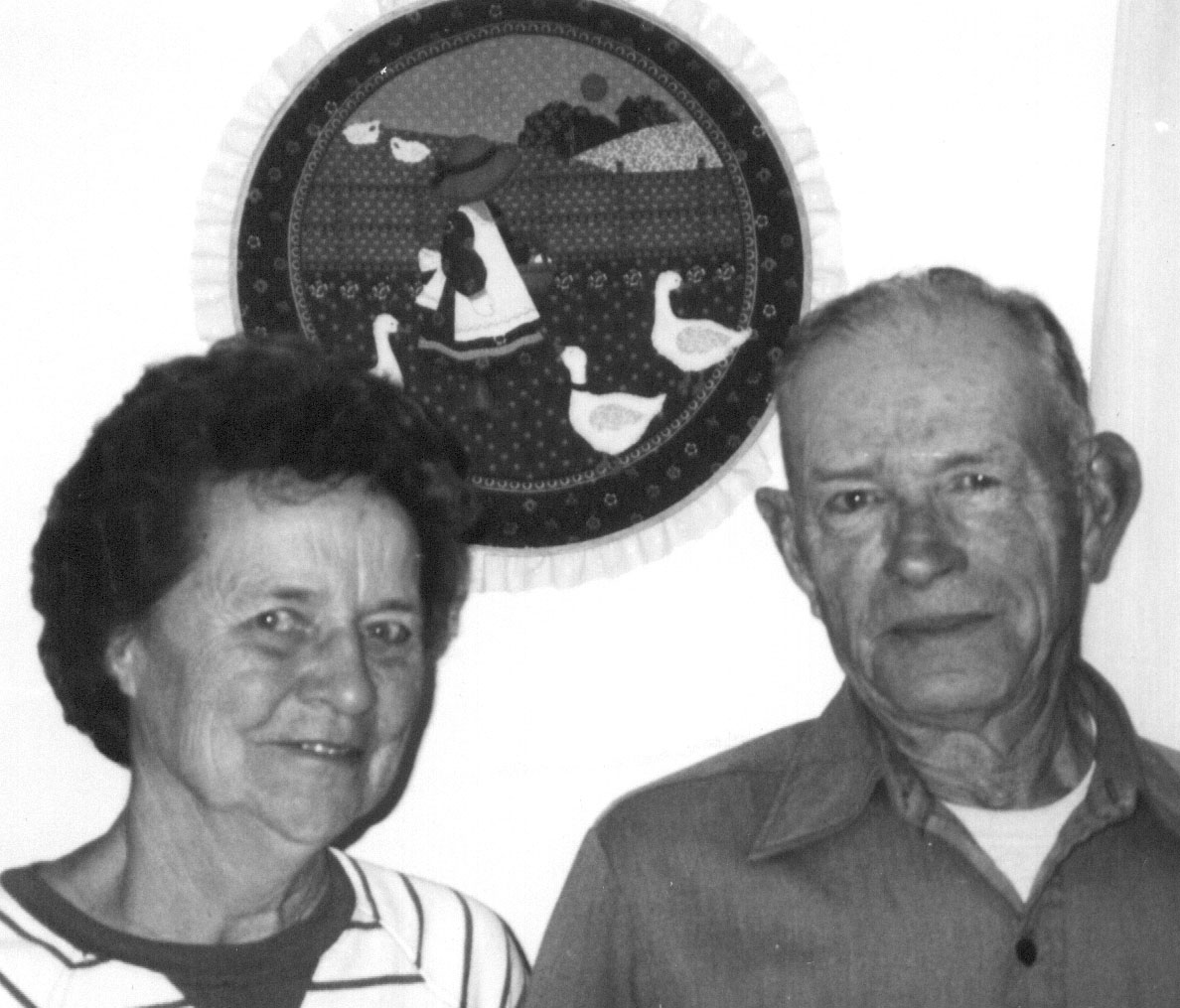
| Darrell Petty |
I met Darrell Petty, of New Castle, Wyoming, at the 1997 reunion of the 90th Infantry Division in Omaha, Nebraska. This is the third and final installment of our conversation.
Darrell Petty Part 1
Darrell Petty Part 2 I wouldn’t take a million dollars for my experiences. I wouldn’t give a nickel to go do it again. But if they ever start getting over here, they don’t have to call me, I’ll grab my own gun and go. That’s the way I feel.
Aaron Elson: And what about the Nuremburg trials?
Darrell Petty: Oh, it wasn’t too much different than the ones at Dachau as far as that goes, except they were bigger names. Of course, old Goering, he cheated them, he cyanided himself. I don’t think they ever figured out where he had it hid, they thought maybe he had it hid in a glass capsule in his rectum because he was checked pretty well. He had a real deep belly button and he might have had it in there, but I think they would have checked it.
Aaron Elson: Now did you have any contact with these prisoners?
Darrell Petty: Just watching them. Standing guard there, watching them. And my folks saw me on a newsreel one time. My folks lived about 47 miles out of town. Anyway, the guy that had the place leased from them, I don’t know if you remember it or not, I don’t know how old you are...
Aaron Elson: I’m 46....
Darrell Petty: They used to have what was called the Pathe News and the film running over the screens at the movies, and it was on Nuremburg, and old Harry saw me there. Well, he drove clear to the ranch that night, and told my folks. He said, "You get in there tomorrow. Darrell is on film." And they came in and saw it.
Aaron Elson: Did you have brothers and sisters?
Darrell Petty: Yeah. There was five boys and two girls.
Aaron Elson: Were you the oldest, or the youngest?
Darrell Petty: I was the fourth child. Two brothers are older than I was, and a sister.
Aaron Elson: Did your brothers go in to the service?
Darrell Petty: My oldest brother served, spent the wartime in England. He was in the 844
th Aviation Engineers. They built airfields. And when he came over to France, they built airfields. Then he spent a couple of months in Vienna. It was Russian-occupied, and we kept two battalions of Americans there at all times to protect the people of Austria, Vienna, from the Russians. Yeah, our allies. And they needed it. He could tell a few things that happened up there. But anyway, then he shipped for home, and he come right back pretty near to Munich, a place called Erding, about 17 kilometers out of Munich, and there was a German airbase there. And I came in off pass one night, I had a class A pass, I came in and the charge of quarters said to me, "Your brother’s here." I said, "What?" He said, "Your brother’s here looking for you." I said, "Well, where in the devil is he at?"
He said, "He’s based out at Erding but he had to catch a truck and go back out." So I got me a weekend pass and went out there and saw him. Then, after that, we got together about four times before he shipped on home. He came home ahead of me. Of course he went in ahead of me, too.
Then my second brother, he lost his left eye in a gun accident. Didn’t lose the eye but it took the lens out. His eye looked pretty normal. Then he had a small hernia, and they wouldn’t take him. He tried to go when I went, but they turned him down. Then the first brother younger than I am, he was in Korea. Then my youngest brother was in Vietnam. He was 20, he put in 23 years, the youngest one. He was in Germany several times, he was in Vietnam several times. Got shot down over there. He was with a helicopter gunship, part of the 101
st. And he got shot down one time, he got out of it pretty lucky as it turned out.
My two oldest boys, they were in the National Guard, but they were in between Vietnam and Korea. Then the youngest boy ...
Aaron Elson: When did you get married?
Darrell Petty: My wife’s from England.
Aaron Elson: Did you meet her there?
Darrell Petty: I met her there, but we didn’t get married, she came to the States and we got married in ‘46.
Aaron Elson: How did you meet her?
Darrell Petty: Oh, just out on pass one time I met her, and we got to corresponding and we kept track of one another. She wrote me letters in Germany when I was there. I didn’t write her many back, because we couldn’t, and especially when they had blackouts, we couldn’t even correspond, we had to get our mail and read it and burn it.
Aaron Elson: Really? You had to read your mail and burn it?
Darrell Petty: Read it and burn it. Couldn’t wear insignia. And if we were gonna write a letter we had to write it when they could send it right out.
Aaron Elson: Why was that?
Darrell Petty: Censorship. Under blackout conditions. Because the Germans said one time that they knew where we was at, they knew where everything in the Third Army was. We never knew where we were. We’d be here, they’d pull us out of here and we’d be up here. That’s the way it was. Interrupted some meals I was trying to fix a few times, and pulled out. But anyway, after I got home, Elaine came to the States.
Aaron Elson: Did you ever ride on the back of tanks?
Darrell Petty: Yeah, I did. Whatever. You’d ride any way you can get. Sometimes the little ten and a halfs that pulled the antitank guns, 57s. I rode on them a few times. We’d jump on the tanks, halftracks, or whatever we could get on. In fact, when we went into Czechoslovakia the first time, I might have been one of the first ten GIs in Czechoslovakia. I’m sitting right astraddle that 76 gun on a Sherman. And the border was just a little ditch. It was about as wide as from here to the wall, just sort of halfway between here and that ...
Aaron Elson: You were straddling the 76 gun? And you could tell the difference between the 76 and the 75. A lot of the Shermans had 75s. But the lead tank, the lieutenant’s tank, often had a 76. So you were on the front tank?
Darrell Petty: Yeah. Oh, yeah, you could tell, you got to where you could tell the difference.
Aaron Elson: And that was on MacFarland’s tank?
Darrell Petty: I don’t think it was.
Aaron Elson: Do you know the name of the village?
Darrell Petty: We weren’t at a village at the time we crossed the border. We weren’t at a village, where I first went in. But we sat in Hof for quite a long time. And the irony of it was that the Germans sent word that if we’d come take Berlin, they’d send all the trucks that they could to help us take it. They didn’t want the Russians to have it. They wouldn’t let us go. Patton wanted to go, they wouldn’t let us go. Eisenhower said not to. Bradley, of course, told us that. Patton told Bradley, he said, I’m quoting from stuff I’ve read, but he said, "Hell, tell him you couldn’t find me and I went." And Bradley said, "No, he’d know that was one of your tricks." And he said, "You can’t do it."
I’ve also got, somewhere, I’ve got a shed and I’ve got stuff stored in it, I don’t know whether I can go through it and find it, somewhere I’ve got a magazine that’s got photocopies of two letters from Truman to Eisenhower. He gave him three options. He said, "I didn’t sign the line of demarcation. Roosevelt did." He said, "You can sit and hold, you can go into Czechoslovakia or you can go to Berlin." Yeah, we wanted to go. But then we went into Czechoslovakia. But I suppose, actually where we went in is close to Hof.
Aaron Elson: Were you in Hof when it was shelled by the railroad gun?
Darrell Petty: Yeah. I was shelled before we got into Hof, too. But we also went out and got a crew of a B-17 that blew up right over the line, and bailed out just before it blew up. I guess that was actually the first foray into Czechoslovakia, because they were trying to kill them in the air, shooting at them.
Aaron Elson: Really?
Darrell Petty: Oh yeah. Watching white tracers go up. And the tail gunner and another guy, they had come down on the wrong side of the line. We got on a jeep and went out there...
Aaron Elson: When you say the line, was this the border line or the...
Darrell Petty: Well, the Germans were dug in on one side and we were on the other. They weren’t crack troops, they were the trooops they just throwed in there for the last thing. And we grabbed a jeep with a .50-caliber on it, and I forget how many now, there was about probably six or seven of us hanging on that jeep all over. We went out through there and I was fortunate enough I got behind the .50-caliber, and we got both those guys. We got the tail gunner. He gave me his jacket and his flight suit. And they wouldn’t let me bring it home. They took it away from me when I tried to bring it home. But anyway, we got ‘em out of there. And we got our butts chewed a little bit. Our company commander got chewed out for us going across there, and he chewed us out, and then he turned around and said, "And I’m proud of every damn one of you." Anyway, yeah, we sat at Hof waiting there, getting ticked off because they wouldn’t let us go there, but then we eventually wound up going into Czechoslovakia. And when the war ended, when they officially stopped us, we were in a little village and I can’t think of the name of it in Czechoslovakia.
Aaron Elson: It wasn’t Susisce?
Darrell Petty: I don’t know. I know one of our kids, his grandparents had come from the town and they made him the honorary mayor, and throwed a hell of a celebration. But that’s where they stopped us. And we were on our way to Prague, supposed to go up there and help the patriots, but the Russians beat us in there. So they stopped us, and that was it. Then we pulled back across, and then we of course, we were in garrison just a little ways from the border, and we had outposts. We’d go up to them, in different spots. One little town we had an outpost in, half of it was in Czechoslovakia and half was in Germany.
Old Patton, our headquarters was in Weiden, we did a review for him. And a parade. He come down off that stand and he went down through the ranks, and he stopped and talked to every damn man. And if you had decorations, he asked what you got them for, and so forth. And his voice didn’t fit his stature at all, he had that high, squeaky voice. And he was a big man, and boy, decked out the best...
Aaron Elson: And what decorations did you get?
Darrell Petty: I’ve got three Bronze Stars, a Bronze Star and two clusters. And the V for valor. I’ve got a Purple Heart, or a Purple Heart and cluster. And I got the Victory medal and the Occupation medal, and the American defense...
Aaron Elson: Now the three Bronze Stars were for what?
Darrell Petty: Well, one off of that Hill 451. And one ... I’m gonna wear your tape out ...
Aaron Elson: That’s all right.
Darrell Petty: I got volunteered to take a jeep, a Red Cross jeep down to one of our sister companies and bring out some wounded. The guy that was the main medic on it couldn’t drive, I don’t know how, that was always weird to me, he had a driver, and the driver, I don’t know if he went AWOL or what he did, but he just disappeared. And he was looking for somebody to drive a jeep.
Aaron Elson: Now, when you say you "got volunteered..."
Darrell Petty: Well, Lieutenant Kelso was standing there. And he said, "Can you drive that jeep?" to me.
And I said, "Well, I never drove a jeep. I’ve drove a lot of trucks and a car, and I bet I can drive it."
Well, he said, "Go with him and take that jeep. Drive it." So I got volunteered. So we went down and we were coming out with those three guys, and that damn gun was trying to hit us, and we brought them out. So they turned me in for that one. And the other one I never figured I should have got.
Aaron Elson: What were the circumstances of that?
Darrell Petty: Well, I didn’t figure I’d done any more than anyone else.
Aaron Elson: But where was it?
Darrell Petty: It was just before we went into Czechoslovakia.
Aaron Elson: That was for going in and getting out the fliers, or something else?
Darrell Petty: He said he was turning us in for that, and I think that’s what it was. I just felt like that was something I should have done, anyway, and it’s probably a good thing we did. When they seen us going, they cranked up those TDs and tanks and come with us or we’d have been in trouble.
Aaron Elson: They went with you?
Darrell Petty: Yeah. But, you know, you do what you have to do. We was reviewing, like I said, for Patton, and he did that, and then he got back up on which it looked like a big prizefight ring, only about four times as big. And he said, "Now, men. You all are men or you wouldn’t be here." I was an 18, 19 year old kid there, I wasn’t 19 yet at the time. September, right after Japan surrendered. If they’d have stayed in the war two weeks more, we’d have been on our way to the States, 90-day leave, and then to the Pacific.
Aaron Elson: And what’s your birthday?
Darrell Petty: May 27
th. And, anyway, he said, "The damn parade’s over." He said, "And I’ve got a lot to say to you, and I want you to hear me." He said, "You fall in just as close around me as you can." And I was probably from here to that post. And he told us things I won’t begin to try to tell you all, but some of the high points, he said, "We should go and whip Russia right now." He said, "We’re here, we’re equipped." He said, "We’ve got the bomb, and they don’t." He said, "Let’s don’t wait till they have it, and they’ll get it." He said, "All we’ve got to do is turn these German troops we’ve got loose and they’ll help us do it." And they would. And that got him in trouble, too, for saying that. Not then, but later. And he said, he just went right down the line why they’d always caused us trouble and this and that, and why, it was like having a fire department, which you didn’t have to have but you had to have it. You know, things like that. And he said, "The Russians will never do anything but cause us trouble." He said, "They will try to keep us out of Berlin." He said "They won’t succeed but they’ll try." That was the Berlin airlift. He said, "Communists will take over China and Russia will be instrumental in them doing it, but in the long run China will become one of Russia’s worst enemies."
Aaron Elson: He said that?
Darrell Petty: Yes. He said, "We will have these little brushfire wars, mostly in Asia, that we will not be allowed to win."
Aaron Elson: He didn’t say that, he said that?
Darrell Petty: You bet he said it. And he said Ike has political intentions, he said he intends to be the president of the United States and he’ll run for whatever party can put him in there. That’s what he said. That was September of 1945. You’re damn right.
Aaron Elson: That’s incredible.
Darrell Petty: You better believe it is. I watched it happen. And he said, "You know," he said, "Ike would back me as long as it didn’t look like I was endangering his career or his political intentions." And that’s when he said he had political intentions. He said, "As you well know," he said, "I always had my ass in a jam." He said, he’s a good soldier, he said, "I’m not saying Ike isn’t a good soldier," but he told us that right there, those were some of the highlights. And he also, I’ve read the books on him, "Before the Color Fades," and "The Last Days of Patton." And he told his family that he wasn’t gonna come home. Yeah, he said, "I won’t be coming back," and he also wanted to be buried over there with his men.
Aaron Elson: Do you think he was murdered?
Darrell Petty: No. I did for a while. But I read the accounts. He got in trouble, and they relieved him of the Third Army and put him in charge of the 15
th, paper army we thought it was, cadre and paperwork. That was over his remarks about the Russians. Then he planned to go bird hunting, him and another general, and the other general come there and then he got called back in the middle of the night. That sounds kind of like maybe it could be a conspiracy and I’ll tell you the Germans, an awful lot of Germans think he was, think it was like Rommel, you know, and the admiration was terrific from the German people. Anyway, he completely changed his plans. He still was going bird hunting, but he was going a totally different route. He wanted to go past two or three of the battlefields. He wanted to go see the ruins of this one place, he believed he was an incarnation, and he changed his route around completely. There was no way they could have known that. But up to that time, I thought yeah, they did. But it wasn’t, I’m sure it wasn’t. In fact, I’m glad it wasn’t. But what a hell of a way to go after all he went through. And I had a guy trying to tell me the other day, oh, he was a crazy, bloodthirsty SOB, a couple of months ago. And I said, "Well, maybe in your eyes he was, but I’ll tell you something. I fought my war under his command." And I said, "If I had to do it again that’s exactly the kind of person I would want to command me." And I would. Because he knew how to fight a damn war. His theory was when you got a SOB, only he didn’t say it that way, running, he said you keep kicking him in the ass just as hard as you can kick him and then he said he can’t turn around and hit you. But he said if you let him slow down and turn around, he’ll hit you. He said, when Joe Louis had a guy in the corner and was gonna knock him out he didn’t back off and let him get cover. That’s the way he was. And one time when he was talking about his men, one time they asked him, "Why do you call your men sons of bitches?"
And he said, "Because they are." He said, "They’re my sons of bitches." But he said, "By the very same token, they know I’m their son of a bitch." He knew we cussed him. And we cussed him, but we didn’t let nobody else cuss him. When you’re hungry and cold and dirty and lousy and everything else ...
Aaron Elson: Speaking of which, did you ever get lice?
Darrell Petty: You’re damn right. And you know what they give us? You know, they talk about agent orange and that stuff? Okay, you know what they gave us to keep the lice off of us and kill them? Coming from little squirt cans like a Johnson baby powder can? DDT. We sprinkled it in our hair, we sprinkled it on one another’s necks, and we got a change of clothes once a month if we were lucky. No bath, but a change of clothes. We wore that stuff. We’d get sweaty and the pores would be open, then they’d cool down and they’d close up. We wore that stuff. DDT. I never heard of anybody getting anything out of that.
Aaron Elson: And where did you pick up the lice from?
Darrell Petty: Who knows? It seemed like France they’ve got them. It seemed like you’d get them there. Then if we could take over a house and sleep in a warm bed or something, we did. Whatever we can do.
Aaron Elson: The Germans all had lice.
Darrell Petty: Well, yeah, and yet they’re a real clean people. And it might sound funny, but being over there, I didn’t get to know the French very well till after the war was over, because I was too busy with other things. But I got to know the Germans pretty well after the war was over too, and personally, I prefer to be around the German people than the French people.
Aaron Elson: And why was that?
Darrell Petty: The morals, for one thing. I was standing in one of them underground tubes, the trains there, in Paris. I went back to see my brother, who was stationed there a little bit. And I got, about a 12 year old girl riding my leg propositioned me, right there in the middle of that damn train in front of everybody. That was just one incident. And not only that, they had their piss spots along the wall, and they’d be standing there holding their girlfriend’s or wife’s hand and talking to somebody else, taking a leak. And my dad told me they did it in World War I, I thought surely it wouldn’t be like that now.
Aaron Elson: Wait a minute, was your dad in World War I?
Darrell Petty: My dad was in World War I, 88
th Division. Browning automatic rifle.
Aaron Elson: And did he ever talk about it?
Darrell Petty: Some. He shot the propeller off of a German Fokker plane one day with that B.A.R. There was three of them after a little French Spad, and the Spad was out of ammunition I guess, and they were coming in, teeing in on him, and they come pretty near straight in on him, and he just pulled down and emptied that 20-round clip and took that old wood prop right off that, and down it went. I don’t know what else all else he got into. He didn’t talk too much about anything else.
Aaron Elson: Did he get gassed?
Darrell Petty: No, he was lucky there. He didn’t get no gas. Well, I seen one of my old buddies, I’d better go find him.
Aaron Elson: All right, I really appreciate your talking to me about this.
Darrell Petty: Well, I don’t want any, you know, I’m just trying to tell you straight facts, like it happened, like I knew it. Someone else might disagree, I don’t know.
Aaron Elson: I think it’s important to get a little bit of this down, recorded.
Darrell Petty: Well, our kids, I’m a member of the VFW, and we’ve been trying to go to schools and talk to the kids, present a little of this stuff to the kids. And you know, man, they’re full of questions. They’re curious. They want to know about it, when it’s over they’re all around you. They’re not being taught this. They’re not being taught this at all. One guy reviewed his daughter’s history book, not from New Castle, there’s another history book, I think she’s in college now. It’s got two and a half pages on World War II. Can you think of anything that’s affected this world any more than World War II has in the past fifty-something years? I don’t. About two paragraphs on the Korean War and nothing on Vietnam.
Aaron Elson: Unbelievable.
Darrell Petty: Yeah. See, it kind of makes you look sick. You know, but you wonder what you went to war for. I’d do it again if it had to be done. I wouldn’t be very good anymore, I had a new knee put in, this left knee, on the 8
th of July, and I’ve got to have this one put in the 10
th of October. So I don’t get around so good.
Aaron Elson: And how old are you now?
Darrell Petty: Seventy, I’ll be 71. Yeah. I never thought I’d live to get this old. I used to look at people and thought they were old, now here I am. I’ve got to find old Coffey and see what he’s doing. Thank you.
Aaron Elson: Thank you!
Darrell Petty: I didn’t mean to...
Aaron Elson: No, please! When I get this typed up, it’s gonna take a while because I have a backlog, but I’ll send you a copy of it.