Showing posts with label Arnold Brown. Show all posts

Friday, December 23, 2016

Like listening to the MOTH Radio Hour

Karnig Thomasian

   Recently, I was interviewed on the radio on WNPR. The producer asked me to send some audio clips to give an idea of some of the interviews I've done. I put together a set of ten clips, although only four were used on the air due to my propensity to talk a little more than I should (it was an interview, after all).
   However, although it was difficult to choose a set of ten relatively brief clips, the ones I selected, and many that I didn't, reminded me just how powerful these voices, and the stories they tell, are. As I listened to them, I thought I could just as easily be listening to the MOTH Radio Hour, a popular storytelling program that has recognized and promoted the entertainment value of storytelling, sharing the stories not only of comedians and entertainers, but of ordinary people as well.
   Following are the ten audio clips I sent the radio station, with a little commentary on each (note: because these were recorded at different volume levels, you may have to adjust the volume up or down on some of the clips):


 1) Karnig, who lives in River Edge, N.J., was a prisoner of war of the Japanese after bailing out of a B-29 that exploded. In this short excerpt, in which he describes the plane carrying him home, he shifts from tears to laughter in a matter of moments. (Karnig's full interview is included in the collection titled "POW! Right in the Keister" in my eBay store.)


 2) Dan Diel. Dan was a lieutenant in my father's tank battalion. The war made philosophers of some of its veterans. In this excerpt he describes a sentiment that was almost universal among combat veterans: fatalism, aka if a bullet has your name on it, there's nothing you can do. (Every time I cross the street, I'm thankful my father didn't name me Peterbilt). (Dan's full interview is included in "The Tanker Tapes" in my eBay store.)


3 Ed Boccafogli. Ed was a paratrooper in the 82nd Airborne Division. In this excerpt, he describes the moment he was wounded at Baupte, France. One aspect of many of the interviews I've done is the veteran's recreation of sound effects. This always blows me away when I'm listening to it. (Ed's full interview is included in "The D-Day Tapes" in my eBay store but can also be downloaded for free from the home page of tankbooks.com


 4) Sam Cropanese. Ditto the above. Brace yourself for Sam's description of a shell hitting a tank. Sam was a Pfc. in my dad's tank battalion. (Sam's interview is included in "The Tanker Tapes")

5) George Bussell. George was a tank driver. This excerpt shows the lighter side of the war, in which he describes going to Paris on a three-day pass with five hundred dollars and returns with 75 cents. Maybe I shouldn't have, but for the radio I edited out his descriptions of Piccadilly and Pigalle. (George Bussell's interview is included in both "The Tanker Tapes" and "The Men Who Drove the Tanks," both of which are available in my eBay store.)


6) John Sweren. John was a prisoner of war who endured the grueling 700 mile march across Germany near the end of the war in Europe so that the prisoners could be surrendered to the Americans and not the Russians, who would have executed all the guards. Get out a handkerchief for this one. (John's interview is included in "March Madness" in my eBay store. A transcript of the interview is available from Amazon.com in the book "Merry Christmas in July.")

7) Arnold Brown. I need to re-edit the original on this now that I know a little about noise reduction; this was one of my first and favorite interviews but I rarely promote it until it's re-done. This is a very short excerpt but is pretty powerful in its statement. (This interview will be available on audio cd soon. A transcript of Arnold's interview is in my book 9 Lives)


 8) Kay Hutchins. I realized I ought to include at least one of the women I've interviewed. Most of them were widows or siblings of men who were killed, and as such would be more appropriate for Memorial Day. Kay's brother Newell was killed but he and another brother were both missing in action, so Kay joined the Red Cross, hoping she would be in England and closer to them when they were liberated. Incidentally, her maiden name was Brainard and she was originally from Hartford but her family moved to Florida when she was young. (Kay Hutchins' interview is included in "The Kassel Cassettes" and is also included in my book 9 Lives)


9) Pfc. Patsy J. Giacchi. This excerpt is a bit long, I whittled it down to about five minutes. It's one of my most popular tracks and for good reason. Patsy was a survivor of Exercise Tiger, a pre-D-Day landing exercise in which two fully loaded landing ships were torpedoed and sunk. Patsy was a little excitable, and his entire tape sounds like the actor Joe Pesci on steroids. (Patsy Giacchi's audio CD is included in "The D-Day Tapes" and his story is included in 9 Lives)


10) Dale Albee. Many veterans went into schools to talk to students. Dale was a sergeant in the horse cavalry who was promoted to lieutenant on the battlefield with my father's tank battalion.  (Dale's interview is included in "The Tanker Tapes.)

Saturday, June 1, 2013

A Medic's Story


   Following is an excerpt from "A Medic's Story," by Edward Madden, as told to me during a 2000 interview at the 90th Infantry Division reunion in Charlotte, North Carolina. "A Medic's Story" is available for Kindle for $1.99 at amazon.com. 
 
   After the Normandy peninsula was cut off, they put us into a holding position and we were put onto this farm. We were there for almost two weeks, in a holding position. And one day, July the 1st, the Germans decided they were going to put some artillery into the place.
   There were two girls who lived on the farm. One was 14 or 15, and her sister was 16 or 17. They were out in the field, milking the cows at about 5 o’clock in the afternoon, when the Germans put the shells in there. The shells landed real close to them, and a couple of the cows were killed, and some of the shrapnel went through the older sister’s heart and killed her. And the younger girl had both of her legs taken off below the knee, both of them, and one of her arms was pretty badly shattered. And I went out and picked her up and brought her into their house. I treated her, then I called and had her evacuated back.
   The very next day we moved out, and I never heard anything about her until later on in the year, in December or so, the Stars & Stripes came out and there was an article in it showing her with Air Corps people. And what they did was they came in, and they built a landing strip right near the farm. They found out about her, so they went back to the Army hospital that they had her in, and the Air Force took her out of there – with permission – and they brought her back to the farm and they built a tent for her. They had their doctors take care of her, and eventually they ended up buying her prostheses for her legs.
   When the Air Corps – these were fighter planes, P-47s – moved forward to keep up with the infantry, they were able to carry her in their planes because they got written permission from General Eisenhower to take her with them. And she met Eisenhower, he came over and talked to her.
   I sent the article home, and I didn’t think anything about it.
  Then in 1985, when I was going to go to Europe, I wrote to Henri Levaufre [a Normandy historian who has assisted many 90th Division veterans] and I told him about her and asked him to find out if the woman is still alive. He wrote back to me and he said, yes, he found her, that she lives only a few miles from where Henri lived. So he said when you get to the hotel – we told him what hotel in Paris we were going to be at – he said he would leave a message for me so I’d know where she lives. So when we got into Paris we got a message stating that her daughter – without the legs but with the artificial limbs; she married a lawyer, and she had one daughter, and the daughter was going to come by in the morning and pick us up and take us to the big hospital in Paris where they take care of the people. So they took us over and we met for the first time. And she didn’t know that it was the infantry that was stationed at her farm – she didn’t remember that it was infantry, she thought there were artillery people, and she didn’t know who I was or that I had taken care of her until I explained to her; I told her that one day one of our officers was going through their barn, and he moved some hay aside and he found a German motorcycle that her brother had hidden, that he’d stolen from the Germans. I told her about that and she said, “Oh, my God, you were there, on the farm.”
   And I said, “Yes, I was the one that took care of you.”
   Well, with all of this the Air Force had adopted her and they’ve had her come over to some of their reunions. And if you ever go to the Airborne Museum in Ste. Mere Eglise, they have a whole display about her there.
   I met her in 1985, and then when I went over in 1994 we stayed with her at her home for a few days and she took us around and she introduced us to the curator of the museum at Ste. Mere Eglise.
   Her name is Yvette Hamel. Incidentally, there’s a book, one of the fliers, he’s a doctor now, his wife met her and his wife wrote a book about her called “Sunward I’ve Climbed,” and it’s been translated into French, too. It’s an interesting book. I’ve got it. She sent me a copy, signed and all.
 

Saturday, February 16, 2013

The Accidental Conspiracy Theorist

A scene from The Twilight Zone, "The Purple Testament"
   I should have known better than to reference The Twilight Zone in the introduction to my new two-CD audiobook "Premonitions, Visions, Nightmares and Other Unexplained Circumstances." Of course I remembered the episode about a World War II soldier who can look into another soldier's face and tell if that soldier is going to be killed, what could be wrong with mentioning that? YouTube, that's what.

   So I go to YouTube and do my due diligence, typing Twilight Zone and World War II into their search thingie and before you can say Clem Kadiddlehopper I learned not only that I was looking for Episode 19 but that it was titled The Purple Testament.

   Naturally, I thought I'd watch the few minutes of it that were available on YouTube. The first segment I watched was either in Spanish or Portuguese, it was posted by a Brazilian so it was probably the latter, and even though I didn't understand a word, the music was sufficiently creepy to get the show's message across. Then I found pretty much the same footage in English and watched that.

   But was I finished? Nooooo. There was a picture from Episode 19 with the title "Was Kennedy's Death Predicted in Hollywood?" Click. The video begins with a line of text saying that we all know that Sept. 11 was predicted, superimposed over a scene of Homer Simpson looking at a tourist flier that says New York and a big dollar sign followed by the number 9, and just to the right of the number 9 are the twin towers so that it looks like 9 11. What? You have an argument with that? How about a screen shot from a 1993 Mario Bros. game showing smoke rising from the Twin Towers?

   And then the question: Did Hollywood predict the death of John F. Kennedy. The soldier who could see the strange light in the faces of those about to die was named Lieutenant Fitzgerald. John F. Kennedy was a lieutenant in World War II and his middle name was Fitzgerald. Of course the conspiracy theorist who uncovered this misspelled his name as Frizgerald, but we all know that JFK was not John Frizgerald Kennedy, why let a typographical error get in the way of a good conspiracy?

   Needless to say, there are eight minutes and 48 seconds of items like "This soldier's name was Freeman ... Orville Freeman nominated Kennedy for President."

   Oh. Did I mention that the video begins with a photo of a sign painted on a highway overpass that says: "Caution 9' 11" "

   Which brings me to my newest double audio CD, which will be available shortly in my eBay store. Here are some excerpts:


Friday, January 18, 2013

Oberwampach, Jan. 18-19, 1945

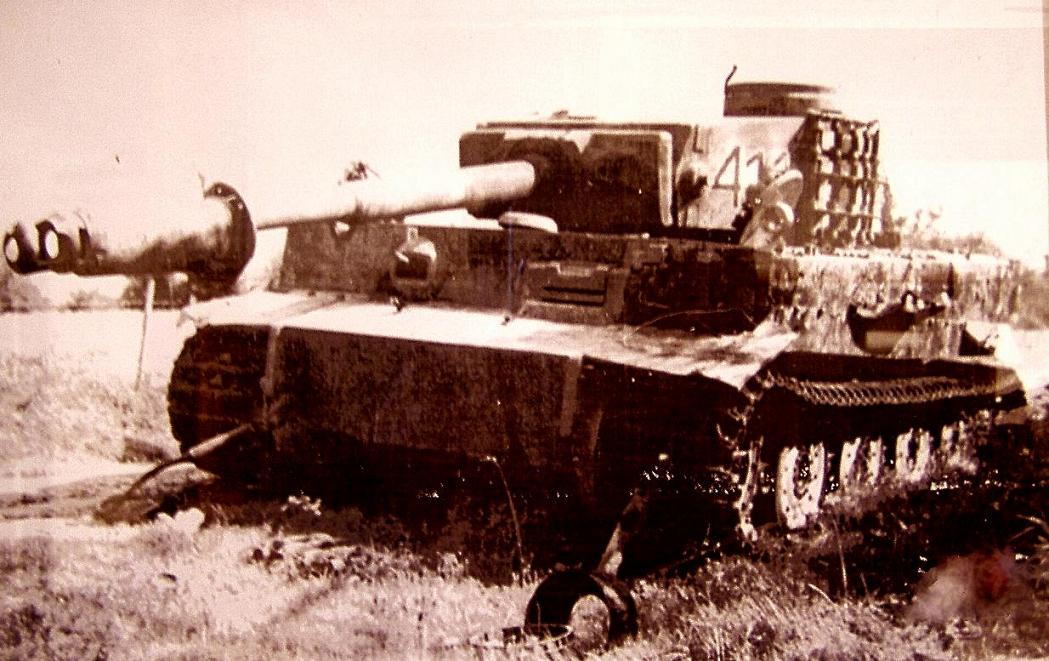
A knocked-out Tiger tank at Oberwampach, Luxembourg

Oberwampach
 
In 1936, Arnold Brown left his home in Cronos, Ky., with 50 cents in his pocket and an eighth-grade education, hopped a freight train, and enlisted in the Army. He was 18 years old. When I interviewed him in 1997, he was 80 years old, a retired colonel, and living in Owensboro, Ky.
During the battle of the Bulge, he was a captain in command of Company C of the 358 Regiment of the 90th Infantry Division. This is his story of the battle of Oberwampach, as told to Aaron Elson.
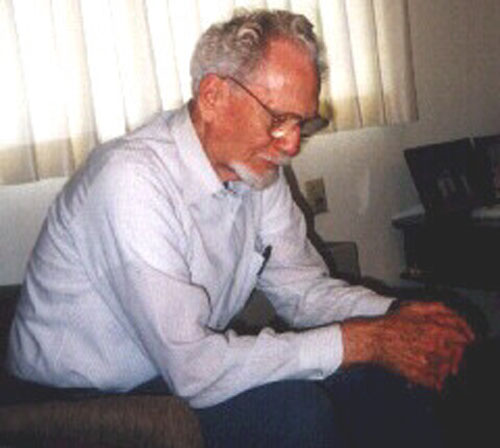

Arnold Brown, in Owensboro, Ky.

Arnold Brown


   The Battle of the Bulge began on December the 16th, when Von Runstedt started his assault.
   We were across the Saar River in Dillingen, and they decided that our position was vulnerable so they had us withdraw under cover of darkness. It was cold, with a freezing rain. We withdrew and occupied a position on land between the Moselle and the Saar rivers, and that’s where we had our Christmas dinner. Then we got orders to move and join the battle in Luxembourg, the Battle of the Bulge.
   We loaded on trucks and went up through those mountains, in the freezing cold.
   My first operation in the Battle of the Bulge was in the village of Niederwampach.
   A and B Company had attacked Niederwampach and were held up, so I was told to go around the left flank and attack from the rear. In a position such as this, I always attacked with two platoons forward and one in support. My position is always in between and slightly to the rear of the two attacking platoons, so I can keep abreast of what’s going on and if I need to commit my support platoon, I’ll know where to do it.
   In approaching Niederwampach, the two platoons split up a little bit, so the part of the village in my immediate front had not been cleared. I entered a building with my command group. When I say command group, that was just myself, my communications sergeant, the radio operator and my messenger. We entered the barn part of this building, and when I entered, I turned around and started to say, "I don’t believe there’s anything in here." There was a platform of hay on the right side. The platform was about waist high, and the hay was a little higher than that, and I saw this hay start to move. So we squared off toward the hay with our weapons, and a German said, "Nicht schiessen! Nicht schiessen!" which meant, "Don’t shoot."
   I said, "Hande ho. Hande ho." Put your hands up. So they put their hands up and came out and surrendered. There must have been 10 or 12 Germans.
   When they surrendered, there was another group of four or five men who came out from the stall behind us, and they surrendered. I heard a commotion over my head and I looked up and I saw there’s a German descending from his rafter, and I noticed that he had hand grenades around his belt, and he came down and surrendered.
   To this day I don’t know why they surrendered. I bring it out just to show you how lucky I was all through combat.
   I had my other platoons clear out the other buildings, and we captured Niederwampach.
   From Niederwampach, we were to go and take Oberwampach, Luxembourg.
   Before we left, the battalion commander informed me that the situation was serious, but it wouldn’t become critical as long as we could prevent the Germans from widening the gaps in our lines. They were sending me into Oberwampach, which was on the shoulder of this breakthrough, with the instruction to hold it at all costs. Don’t let the Germans widen the gap. That was my order.
   In moving across the open fields to get to Oberwampach, we came under machine gun fire from a position on our right front. So I told the radio operator, who’s carrying the SCR300 radio on piggyback right beside me, to call for artillery fire to neutralize this machine gun. This radio operator now is shot through the head and falls dead at my feet while I’m on the transmitter making that message. There are bullets whizzing around.
   We got this accomplished, but instead of getting artillery that time, we had a tank in support, and the tank took care of that machine gun nest.
   Another man picked up the radio for me and we took Oberwampach with very little resistance. It was about dusk, and before I got my security all arranged, a German halftrack towing a 120-millimeter mortar and a crew of 12 had moved into our midst. They moved into one of the buildings. They didn’t know we were there and we didn’t know they had moved in, until I sent my messenger back to one of my platoons, and he went to the building where this platoon had originally been. He opened the door, and it was full of Germans.
   Two platoons were going into position, so I took my other platoon and gave them the mission of knocking out these Germans, and I told everybody in the company to keep their heads down because we’re going to have a fight right in our midst.
   This platoon got in a semicircle around that building, and they opened up on it. They fired a few rifle grenades in it, and when the rocket launchers fired, one of these Germans put up a white flag, and they came out and surrendered. But only six of them surrendered. That’s what the Germans will do sometimes; they’ll surrender some while the others get away, and these other six escaped through the darkness while we stopped shooting.
   Well, these Germans were all 6-foot blonds, and they had Adolph Hitler shoulder patches. They were part of Hitler’s elite guard. In other words, up until this time they had been protecting Hitler’s headquarters, and this is the first time I guess that they had actually been committed to hard fighting.
   So we were literally fighting Hitler’s supermen. All the same blood type, so if they had to have a transfusion they didn’t have to check it out or anything, they’d just take one man to another.
   I questioned them, and found out that they were part of a panzer division that was moving into this area. Based on that information, I asked the battalion commander to send me some more weapons to defend against an armor type attack. He sent me up a platoon of tanks and a platoon of tank destroyers, and I deployed them. And it’s a good thing, because the Germans launched an attack at 3:30 in the morning. If we hadn’t rushed up those tanks and tank destroyers, they would probably have overrun us the first night.
   This position we had moved into gave us observation over one of the main routes the Germans were using that had our troops surrounded at Bastogne. So they sent elements of a panzer division to knock us out, and we ended up in somewhere between a 36 and a 72 hour battle, night and day. When the Germans were not making a ground attack, they were bombarding us with artillery fire and direct tank fire. All of their attacks were at night except one. And this was their last attack; I’ll get into that later.
   When these battles were going on two of my senior platoon sergeants came to me and they said, "Captain, this is the roughest that we’ve ever experienced." One of them said, "I think we had better withdraw; if not we’ll probably have to surrender."
   And I had to tell them that we’re going to hold until the last man. I was no hero. These were my orders. Knowing that at some time, if the Germans got these tanks into our position, we’re out of ammunition and there’s no way we could resist, then I would surrender or tell them to bug out. But I couldn’t tell these men that at that time.
   Now these sergeants were brave. They’d fought the Germans longer than I had. They’d fought the Germans in Sicily, in Africa, and now they’d been with me from Normandy in five major battles through the French Maginot Line, the German Siegfried Line, so they were just stating the facts, and I agreed with them. But I had to do what my job was at the time.
   So we did hold. And rather than go into a lot of these operations up until the last attack, it was either on the 18th or the 19th of January, the Germans made their main effort to overcome us, and they made this attack in daylight hours.
   They hit my right flank where this knoll was that I had a platoon, with four tanks and I estimate a platoon of infantry. Coming across a big long rolling ridge to our front we could count 11 German tanks. There was infantry riding on the tanks. There was infantry in halftracks following over this ridge just as far as we could see, and they were shooting everything they had while they were moving in.
   I got on the telephone with the battalion commander, and I asked him to give me all the artillery fire he had available. He turned me over to the artillery liaison officer of the battalion, and the liaison officer asked me to zero one gun in on this target. I had two observation posts set up, one in the right platoon and one in the left platoon, so through them we relayed information. We zeroed one gun in on this target, and the artillery officer said, "Fire for effect."
   He had nine battalions – that’s 108 artillery pieces – that hit that target at one time. You never saw such a slaughter in all your life. These Germans didn’t make a tactful withdrawal; it was every tank and every man fleeing for his life. Nothing could have overcome that. It’s impossible. My men were firing standing up, like shooting ducks in a pond, but the Germans were so far away they’d be lucky if they hit anyone.
   So the Germans withdrew and they didn’t fool with us anymore.
   One other incident took place that I think is of interest.
   I had my company command post set up in the home of a family in Oberwampach. We were in the home of the Schilling family. When the Germans were shelling us, a five-year-old boy got excited and dashed out the front door, right into the impact area of the artillery. A 20-year-old soldier dashed out to rescue the little boy. They were both mortally wounded.
   The soldier died, and asked someone to rub his left arm, he claimed it hurt him. I did rub his arm, and he turned blue and died.
   The little boy died slowly in his mother’s arms, and to see this – you read about these things, but to see the grief this mother was going through of her son being killed by something they had no control over, it really brings some strong lessons to you.
   This soldier’s name was Sergeant Whitfield. I recommended him for a decoration and he got it. Now he was a true hero. He gave his life trying not to defend his own life, but to rescue an innocent little boy, and truly he earned his decoration.
   He got the Distinguished Service Cross.
   After the battle, we also picked up a German soldier who had been wounded. He had been shot in the leg apparently with a .50-caliber bullet, and he laid out overnight in this freezing, subzero weather. Both his arms and both his legs were frozen stiff as a board. He begged us to shoot him. I couldn’t do it. I asked for a volunteer. Even if he survived, he’d have to have both arms and both legs amputated, and this could have been a mercy killing. But these battle hardened soldiers that were fighting Germans a few minutes before would not volunteer. One soldier, out of sympathy for the suffering and bravery of this soldier, lit a cigarette and held it to his lips. Another soldier brought him a hot cup of coffee and held it for him until we got the litter jeep up there and put him on the litter jeep and sent him to the rear. I’ve always been curious to know what happened to him, but I believe he would have died before they got him back to the aid station.
   After this battle, the division decoration board section came down and they said that with what happened down there the men deserve some medals. They said, "We want to write you up for a DSC."
   And I said, "No." I said, "Every man in the outfit deserves it as much as me and some of them more than I do," and I was really being honest about it. I wasn’t trying to collect medals. I was trying to save as many of these men as I could from getting killed in this terrible war.
 
- - -
 
   There will be more about the battle of Oberwampach from the perspective of the 712th Tank Battalion in my forthcoming book "The Armored Fist." Email me to reserve a copy. Thanks, Aaron Elson
 

See how you can help Oral History Audiobooks grow