Showing posts with label Indiegogo. Show all posts

Friday, March 22, 2013

Aaron Elson Interviews Himself

 
   Now that my new book is available, I thought it would be way cool to do one of those blog tours. Then I discovered that there's like this blog tour circuit, and there are blog tour brokers and bloggers who charge money, albeit not a heck of a lot, for you to fill out a boilerplate interview template. So I decided phooey, I can just as easily interview myself. At least I read the book.
 
Q. Good afternoon. Thank you for stopping by.

A. What do you mean? I live here.

Q. In that case, I wouldn’t mind a cup of coffee.

A. I only serve tea.

Q. That's right. Your book is being published in England.

A. Yes. Would like a crumpet with that?

Q. Thank you. State your name for the record, please.

A. Aaron Elson

Q. No middle initial?

A. C for Charles. That was one of my great-grandfathers. Aaron was another. Aaron was also my grandfather’s middle name, Milton Aaron Reder. He wasn’t a very good grandfather, but he was a doctor who was much-loved by his patients.

Q. Why do you say that?

A. He was in his office seven days a week, twelve hours a day and six hours each on Saturday and Sunday. He outlived all three of his children and was 92 when he died.

Q. Was he a veteran?

A. He was a doctor in World War II. It’s one of my great failures as an oral historian that I never got him to tell me about his experiences except for one story. He was on a beach treating a soldier who had an injured leg when some dirt came flying into the foxhole or wherever he was doing the treating. He said he shouted for the person to quit throwing dirt on his patient, and the person he yelled at turned out to be General Patton. I don’t know if that’s true or not, but knowing my grandfather it probably was. He may have been traumatized by the war, because he lost his voice – it was a psychological thing, there was nothing wrong with his vocal chords – and could only speak in a hoarse whisper.

Q. Was your father a veteran?

A. Yes, he was. That’s what got me started doing oral history. He was a wonderful storyteller, but he was in and out of hospitals the last few years of his life – gout, prostate problems, heart attacks, a quadruple bypass. He had a heart attack when I was 30 years old, and I realized I’d forgotten most of the stories he told about World War II. So I bought a little Sony recording Walkman and was going to take it with me when I went to visit him in the hospital. I forgot the tape recorder, he got out of the hospital, and died two weeks later. That was in 1980. Seven years later I discovered a newsletter addressed to him from the 712th Tank Battalion Association – that’s the outfit my new book is about.

Q. What did you do with the newsletter?

A. I wrote to its editor, and asked him to put a notice in the next issue saying if anybody remembered a Lieutenant Elson, would they get in touch with me?

Q. And what happened?

A. Almost by return mail I got a letter from Sam MacFarland. He said, “I didn’t know your father, but the battalion is having a reunion. It’s too late for the next newsletter, but if you come to the reunion, I’ll take you around and we’ll see if we can find anyone who remembers your dad.”

Q. Did you go?

A. Yes I did.

Q. And what happened?

A. Sam and I found three veterans who remembered my dad. I explained that I remembered very little from his stories – the name of a fellow lieutenant, Ed Forrest, who was killed, and that my dad said there was something about Ed that gave him the impression Ed either didn’t want or didn’t expect to come home. His evidence was that Ed readily volunteered for an exceptionally dangerous mission in Normandy. He speculated that Ed’s father may have been a minister who didn’t approve of him going off to war.

Q. Was that the case?

A. Actually, no. Years later I would learn that Ed’s father was an alcoholic, his mother committed suicide, he fought with his father and a minister took him in when he was 14 and raised him like a son. The minister, it turns out, was a chaplain in World War I and couldn’t have been prouder of Ed when he became a lieutenant.

Q. My goodness. How did you learn all that?

A. I interviewed Ed’s brother, as well as the woman he likely would have married if he came back. I read an unpublished memoir written by his sister, and a diary left by the priest.

Q. What else did you know about your father’s experiences?

A. He said he replaced the first lieutenant in the battalion to be killed. He was wounded in Normandy and again in December. The December wound was in a place called Dillingen. Almost everybody at that reunion had a story about Dillingen. I was like Wow.

Q. What led you to morph from reconstructing your father’s experiences to learning about the other veterans’ experiences.

A. Morph, that’s a good word. Some of the veterans asked if I’d like to go to lunch with them. One of them was telling a story on the way to the parking lot, and when we got to his car, he opened the door, but it was about five minutes before anybody got in because he had to finish the story. I entered the hospitality room in the middle of another veteran telling a story and listened to the end, kind of like when you go late to a movie and miss the beginning but still get caught up in the action. Later I asked the veteran to tell me the story from the start.

Q. Why did you write “The Armored Fist”?

A. When I began recording the veterans’ stories, I didn’t know squat. I thought the Battle of the Bulge was an American offensive (it wasn’t. It was a German counteroffensive). I looked at the battalion’s record – 1,165 men, 3 Distinguished Service Crosses, 56 Silver Stars, 465 Bronze Stars, 498 Purple Hearts, three Presidential Unit Citations – and the only thing I recognized was the Purple Hearts, because my father got two of them. As I recorded the stories of its veterans, I began to realize, this outfit deserves its place in history.

Q. What makes your book different from many other books of military history.

A. You should say “many other great books of military history.” There are more great books of military history than you can shake a stick at. But I believe my book is, in some ways, unusual. When I was writing my first book, I called the Military Book Club, and the person I spoke to said there were two things readers of military history wanted: maps and pictures. So I put a couple of maps and a bunch of pictures in my first book, “Tanks for the Memories,” which I self-published. But the truth is, I couldn’t read a map if it led to a pot of gold. I’ve been lost in almost every state in the nation. There are no maps in “The Armored Fist.” There are a lot of pictures, but the pictures aren’t so big that they dwarf the text.

Q. You’ve said “This isn’t your father’s military history.” Is that because it’s your father’s story?

A. No. I say that because it has some unusual sources. Many books about World War II draw on morning reports, after action reports, oral history interviews, previously published books, etc., etc. I have some of that in “The Armored Fist,” but I also have excerpts from the diary of the priest who raised Ed Forrest. I draw on letters and high school essays of a young replacement who was killed. I quote from a memoir written by the sister of a soldier. I’ve tried to show a deeply human side of the war.

Q. What do you plan to do next?

A. My publisher wants me to write a book about the Kassel Mission, one of the most spectacular air battles of World War II. It’s also one of the great little known stories of the war.

Q. Well, that about wraps it up. Is there anything I’m forgetting to ask.

A. Yes. Now that “The Armored Fist” is out, you could ask your readers to consider donating to my Indiegogo campaign, so that I can launch the “Yanks in Tanks Tour.”

Q. I certainly will. Please check out Aaron Elson's Oral History Audiobooks Indiegogo crowdfunding campaign.

A. And if there are any other authors reading this who'd like to interview themselves, email me and I'll be happy to post your interview on my blog.

Q. One more thing. Is there an excerpt from "The Armored Fist" available?

A. There'll be one in my next blog post. Oh, one more thing.

Q. What's that?

A. I'd like to recite a little poem:
    At the top of this page
       On the right hand side
    You'll see some little
        icons
    Hit the Share button
    Hit the Tweet
    Thank you

Q. That doesn't rhyme.

A. It's free verse.

Q. It is?

A. It didn't cost anything, did it?

- - -
Please subscribe to the Oral History Audiobooks email newsletter to keep up with the latest developments and specials.


Saturday, March 9, 2013

The Iron Cross and a Three-Day Pass


From left, Ed Spahr, Jim Gifford, Tony D'Arpino, Bob Rossi
 

   In 1991, at the annual reunion of the 712th Tank Battalion, I conducted an impromptu interview with Ed Spahr of Carlisle, Pa. I wasn't as familiar with the history of World War II as I am today, and the interview comprised mostly generic questions: Were you scared? How was the food? Were you wounded?
   That last question brought an interesting answer. It was during the Battle of the Bulge, his tank was knocked out, and his lieutenant was wounded. In fact, the bullet, most likely from a machine gun, was still sticking out of his head near one of his eyes. The lieutenant didn't know how badly he was injured/ When the crew abandoned tank and reached the relative safety of the other side of the tank, the lieutenant, Jim Gifford, handed Spahr a camera and said "Take my picture."
   It was while he was holding the camera up to take the picture that he felt something like a bee sting on the fleshy inside part of his arm.
   "I didn't even miss a day," he said.
   A year later, at the 1992 reunion in Harrisburg, Pa., I got quite a surprise. I was in the hospitality room when Lieutenant James Gifford entered. Wide-eyed, I blurted, "You're Lieutenant Gifford!"
   Spahr was at that same reunion, as was Tony D'Arpino, the tank driver that day, and Bob Rossi, the loader. The only missing member of the crew was Stanley Klapkowski, the gunner.
   At that reunion, I sat down with the four crew members and they reconstructed the events of that day, and spoke of some of their experiences before and after the tank was knocked out. I had already interviewed Spahr and Rossi, and in the ensuing months I visited Gifford in the used-car lot he owned in Yonkers, N.Y., and D'Arpino at his home in Milton, Mass. Some time later I even visited Klapkowski in McKees Rocks, Pa., to get his version of the events.
   All of those interviews make up my audiobook "Once Upon a Tank in the Battle of the Bulge," and a narrative version of the events comprise a chapter in my new book, "The Armored Fist," due out in April from the prestigious British publishing house Fonthill Media.
   Here is an excerpt from that 1992 group conversation:

October, 1992, Harrisburg, Pa.:

James Gifford: I was a lieutenant at the time, a first lieutenant. When I left the service I was a captain in the Ninth Armored Group.

Bob Rossi: I was a loader in Lieutenant Gifford’s tank. I was a private first class. I got out of the service in January 1946.

Ed Spahr:  I think I’d better be classed as a utility man with all of C Company because I served in every platoon. I think I spent more time in the front than a lot of other ones did, because if that platoon wasn’t there, I was with another one.

Tony Darpino: I was a driver, first tank, third platoon, and towards the end I was a tank commander for a very short period when the end was in sight. I was discharged in ’45.

Aaron Elson: Where did you come together as a unit?

Bob Rossi: Just prior to the Battle of the Bulge, Jim was brought in as our new tank commander.

Tony D’Arpino: He was our platoon leader.

Bob Rossi: We were in the No. 1 tank. We wound up in the town of Kirschnaumen in Belgium. I can recall so vividly how we wondered where Lieutenant Gifford was all day. We were in a hayloft, and he came up the ladder, it was a footladder, he said, “Come here, I want to show you something.” He had draped the tank in white sheets. They weren’t whitewashing the tanks at that time. There was snow all over the ground. So he scrounged these white sheets from all over and he draped our tank so we’d have camouflage.
   That same night, he had gotten a package from home, and he had some canned chicken. He shared his package with all of us.
   We were talking about home, and he said to us, “You know, I’d rather lose an arm or a leg than lose my eyesight.” He said, “There’s too much to see in this world.” And the next day when he got hit, he got hit in the eye.
   It was a hairy situation because we had gone into a pocket to flush out the Germans, and as fate had it, our left track was knocked off.

Tony D’Arpino: Wasn’t that the time that we just took one section of the tanks, just us and the second tank? We were almost ready to eat supper when we had to go out.

Bob Rossi: We only had two tanks, us and [Sgt. Jim] Warren’s. There was concentrated machine gun fire. Lieutenant Gifford got hit in the right eye, the bullet lodged in his cheek. I thought he might jump out of the tank, and I yelled to him to keep down or they would blow his head off. He said, “I don’t want to jump out, I want Warren to come forward to help us.”
   Then he said to me, “Rossi, how bad am I hit?”
   And I lied, I said, “You don’t look bad, Lieutenant.” But he looked like somebody hit him in the face with a sledgehammer.

Tony D’Arpino: I remember something else about that, too. He was great for having a camera around your neck, right?

Bob Rossi: I’m gonna get to that. So he says to me, “Fire the smoke mortar.” And this is the joke. In my excitement, I forgot to knock the cap out of the top, and when I fired the first mortar it went like this [motioning straight up and down]. And then I fired some subsequent mortars to give a smokescreen.
   As we were abandoning tank, Lieutenant Gifford was firing his .45 and pulling Spahr out by one of his arms. Spahr’s leg was locked.

Ed Spahr: I had a little blood coming out, something had hit me, I went along with him back to the aid station.

Bob Rossi: Ed was the assistant driver. His machine gun was firing by itself it was so hot. And I said, “Twist the belt, twist the belt,” so he could stop the bullets from feeding into the machine gun. And Klapkowski, who was our gunner, he and I were running in a zigzag, we could see the snow being kicked up around us. As we were running, a recon truck came toward us, and Lieutenant Gifford said, “Fire that .50 and protect these boys!”
   And the guy yelled out, “It’s our last box!”
   He says, “Fire it anyway, you sonofabitch!” And that’s when they started firing the .50 to give us cover.
   As we got out of the line of fire, he handed his .45 to me, he says, “Hold this for me till I get back.”
   And with that, he says, “Take my picture.”
   I says, “Lieutenant, I can’t take your picture.”

Ed Spahr: I took it. That’s the only way I could have got hit, right here [on the inside part of the arm], when I was holding the camera up to take his picture. It felt like a bee sting.

Bob Rossi: And there he was, having his picture taken. He had gotten a Bronze Star that morning, he had the ribbon, his face was all puffed up, blood all over his combat jacket, he says, “Take my picture.”

Jim Gifford: I couldn’t see out of my right eye, but I didn’t know how bad it was. It’s a funny thing, I didn’t feel any pain when the bullet went in.

Tony D’Arpino: I can remember plain as day one thing about that night, that evening. We were about ready to eat our meal, whatever it was, and they said that there was a small pocket, it was holding the infantry down, they wanted the tanks to clean it out. You took two tanks. It was just supposed to be a small pocket. And it turned out to be a little more than that, I guess.

Jim Gifford: It was bad news.

Bob Rossi: After we were knocked out, Sergeant Warren’s tank came forward, and under Lieutenant Gifford’s orders, he set our tank on fire.

Tony D’Arpino: We had ruined the radio. We put a grenade in the gun barrel. We did everything we were supposed to do.

Bob Rossi: So the Germans couldn’t turn the gun around and fire on the town.

Jim Gifford: I had Warren shoot into the back of our tank because the Germans were stealing the tanks. They’d use them against us. The track was blown off so it was useless anyway.

Tony D’Arpino: But the gun was still good.

Jim Gifford: So we immobilized it by hitting it in the back.

Tony D’Arpino: We had the best working escape hatch of anybody in the platoon. I used to oil that thing up good, so that when you touched the lever it would really fall out. Sometimes that was the only way of escape. If you’re inside the tank and the hatches are down and the gun is traversed over your hatch, you can’t open it to get out, you have to go out the other way.
   I can remember always telling Klapkowski, he was the gunner in the tanks that I was in most of the time, and I always told him, “You sonofabitch, if we ever get knocked out, make sure that gun’s in the center, because if I can’t get out because you’ve got the gun traversed over my hatch,” I says, “I’ll haunt you. I’ll come and pull the sheets off of your bed.”

Jim Gifford: I’m sure there’s a few guys that aren’t here today because of that gun being over their hatch.

Tony D’Arpino: That used to be my biggest worry.

Bob Rossi: We subsequently got a new tank after that. Sergeant Holmes became our acting platoon leader. When Lieutenant Gifford was wounded and we were knocked out, that was January 10, 1945, Berle, Belgium — Luxembourg.

Jim Gifford: Outside of Bastogne. Bastogne was right over there, we were heading for it. We had to go down a defile with a lot of woods and they were dug in there, but we didn’t know that.

Bob Rossi: We were committed to the Bulge already. When Lieutenant Gifford was evacuated, we waited maybe several weeks for a replacement tank, and that’s when we got this new tank, and Sergeant Holmes became our acting platoon leader. He was the platoon sergeant. And on February 8, 1945, we were knocked out again, at Habscheid, Germany. We were in a wooded area. They called us during the night.

Tony D’Arpino: In high ground, no?

Bob Rossi: In high ground. And it seemed like the Germans were just waiting there for us.

Tony D’Arpino: They had it all zeroed in. They had three lines of machine gun fire. Some just grazed the ground, some came waist-high.

Bob Rossi: When light came, it seemed like everything opened up at one time. They knew we were there, in the woods, and they had mortars, artillery, machine gun fire, and all of a sudden Sergeant Holmes collapsed in the turret, and I was yelling, “Holmes! Holmes! are you hit?” And Spahr says to me, “Sure he’s hit.” And with that we picked him up, and put him behind the gun. Shrapnel had gone through his steel helmet. He was hit in several places. The towel that was around his neck, a bath towel, was sopping wet with blood.
   Later, after this happened, I noticed I had blood all over my left sleeve. And with that, I asked  D’Arpino, “Give me the first aid kit.” And with that, he can’t open it. The darn thing was rusted shut. So with a chisel he opened up the first aid kit, and I bandaged Sergeant Holmes as best as I could, and as he’s laying on the floor he called up Sergeant Gibson, he says, “Gib, I’m hit, I’m getting out of here.” And Gibson called back, he says, “We’re all getting out of here.” And with that, Gibson started up the hill, and this is when we found out that the Germans had the hill zeroed in. As Gibson stopped, they fired two rounds in front of him and missed him. He took off. We came up the hill, and Bang, we got hit. The 88 went through our engine compartment and landed between [Jim] Sessions’ —  he was the assistant driver — it landed between his legs.

Tony D’Arpino: He was a recruit.

Ed Spahr: First time up.

Bob Rossi: I think it was a day before or a day after his 18th or 19th birthday.

Tony D’Arpino: I was driving, and I knew there was another tank behind me to get out, so I tried pulling over to the right to give him room to get around me, and of course nothing was working. Sessions, the assistant driver, he was new, he grabbed the fire extinguisher, and I says, “Jump, you crazy bastard, jump!” Matter of fact, I didn’t even unplug the radio or nothing, I just got out.

Ed Spahr: He never did attempt to get out till I got ahold of him. I jumped back up on the tank and I grabbed him.

Bob Rossi: I neglected to say, one tank was already knocked out in the woods, their bogey wheels were knocked off, and we had taken two guys from that crew into our tank, so there were five of us in the turret when there should have been three. When we got hit, I was the last guy to get out. I was on my hands and knees waiting for the others to get out, and I no sooner got out of the turret than the ammo started to go.

Tony D’Arpino: It’s taking a while to tell this story, but it all happened within seconds, and when that thing hit and I saw that red projectile land beside Sessions’ foot —  it came right alongside by the transmission, the transmission was between the driver and the assistant driver — it was laying right down by his left foot.

Jim Gifford: The projectile, gets red hot.

Ed Spahr: Cherry red.

Tony D’Arpino: I didn’t even bother unplugging my helmet radio. I just put my hand outside, tried to pry myself up, and that tank was just as hot as a stove.

Ed Spahr: When they hit us, it just felt like it drove the tank ten feet forward.

Bob Rossi: I automatically turned around when we were hit. I turned around to pull the extinguisher. We had an inside extinguisher. It didn’t do any good. The fire was so tremendous with all that gasoline.
   And right after we got hit, just before I got out of the tank, that’s when the other tank, which was just about on our left rear, they got hit. But they weren’t as fortunate as us in the sense that [Grayson] LaMar, who was the driver, he was burned pretty bad, I can remember when he took that stocking mask off his face he took the skin right off his face. And Whiteheart, who is now dead, the type of tank they had, they had ammo stacked in back of the assistant driver, it shifted, hit him right in the back.
   Van Landingham was the tank commander, part of his heel was torn off from the shrapnel.
Tony D’Arpino: I remember we got all the way down, we crawled all the way down that hill, got down to the bottom, and Van Landingham was missing, right? He’s still back up there. So I don’t know who the other guy was and myself, we grabbed a stretcher, we went back up — we crawled back up. They were shooting right over our heads. I thought that was my last day, out of all the —  I had three tanks knocked out from under me, and out of all of them, I thought that was it. I had it.
So we crawled up there with a stretcher to get Van Landingham, right? We finally get to him and he’s moaning and groaning, I’m looking for blood, you know, I don’t see nothing. He’s got them combat boots on. I look, and he goes, “Ohhh, ohhh,” real sharp, right, now he must have been hit someplace, I don’t know where. I couldn’t see any blood. We’re trying to get him on that stretcher, and we’re trying to crawl on our hands and knees with the stretcher, get him down over the crest where they couldn’t see us. They had that place zeroed in. And we’d go a few feet, and then, “Shooom!” We’d drop the stretcher. The third time the stretcher hit the solid ground, Van Landingham, “Oooooh,” he would groan, anyway, God willing, we got him down to the bottom, and I don’t know who that man is today, I’ve thought about this a million times, but somebody saw me and whoever else had that stretcher, and it was an officer, not in our company, it was an officer that was down there, and he took our names, he thought we should get the Silver Star for what we had done. And then I was told later on that this man was called back to England, he had to be a witness in a court martial. I don’t know who the officer was. He wasn’t in our outfit.
  
Ed Spahr: He was a captain in the infantry up there. You remember, we all got up in that bunker?

Bob Rossi: We were going from pillbox to pillbox.

Ed Spahr: I’ll never forget that day. The snipers were, you raised up a little up a bit and Ping!

Tony D’Arpino: Every time we’d hear “ping” we’d drop the stretcher and Van Landingham would hit and he’d groan.

Bob Rossi: You know what was ironic? We were running from pillbox to pillbox to get out of the line of fire after this all happened. And the infantry was dug in in foxholes, they said, “Don’t run on the road, it’s mined. Don’t run in the gully, it’s mined.” And we finally got to this one pillbox, and I think it was a major or a lieutenant colonel, he wanted American wounded put outside because he complained that they were in the way of him conducting business. And we were PO’d at him. I was so mad at the time, I was only a kid, but I was so mad I felt like shooting the German prisoners who were there because they did this to us.

Ed Spahr: I remember that one infantry boy, this captain said to this guy, he pointed to him, he said, “Get up there and get that sonofabitch!” And that infantry boy was sitting there, he handed him his M-1, he said, “Here, you get him.”

Tony D’Arpino: If you remember, that night, it was dark when the infantry moved us up there.
Bob Rossi: It was raining.

Tony D’Arpino: We argued about it. You move the tanks at night, Jesus, they make too much noise. But the infantry officer said, “I’m giving you an order.”

Bob Rossi: So Holmes says to me, “Rossi, get out.” He handed me his tank commander’s watch with the luminous hands, he said, “Lead the tank.” Now I’m running in front of the tank in the rain, holding it up as I’m running so D’Arpino can see the watch in the dark. And when we got knocked out the next morning, I said to myself, “Thank God my clothes were soaking wet. I think that’s what saved me from getting burned to death in the tank.” All my clothes were soaking wet.

Ed Spahr: We lost four tanks that day.

Bob Rossi: Three. Three out of the four.

Ed Spahr: That’s right. Gibson’s was the only tank that got out.

Bob Rossi: Two tank destroyers were lost. And we lost about a company of infantry. I mean, we took a beating.

Tony D’Arpino: When daybreak came and I looked around, I said, “Hooooly shit.” You could see for miles. I mean, we were really exposed. They had three lanes of machine gun fire.

Bob Rossi: You remember later on we were kidding, it was bad, but later on we kidded, “That German gun crew must have all got the Iron Cross and a three-day pass.”

- - -
 
Order "Once Upon a Tank in the Battle of the Bulge" on audio CDs from Amazon.com
 
Bid on "Once Upon a Tank in the Battle of the Bulge at eBay (the price is a little higher but the shipping is free, and you can "make an offer" as well.


Saturday, February 2, 2013

Two (or maybe three) Degrees of Separation


   Three of my Facebook friends have forwarded me a rather touching story, purported to be true, about a teacher whose life was changed by a forlorn kid who is so inspired by her that he grows up to be a famous doctor and has the wing of a hospital named after him. The story, accompanied by a picture of a famous painting by Norman Rockwell, is a genuine tearjerker. The only problem, according to a meticulously researched article at snopes.com, is that it's fiction, and like some kind of urban legend has been making the rounds since before the Internet was of kindergarten age.
   What isn't fiction, however, is a link between the Rockwell painting, which is titled "Happy Birthday, Miss Jones" but may be more commonly known as "The Teacher," and the 712th Tank Battalion.
   Prior to World War II, Edward L. Forrest, who would become a lieutenant in the 712th, lived in Stockbridge, Mass. After graduating from Clark University in Worcester, Mass., he worked for a year or two at the Stockbridge Bank, and later taught at Williams High School. His best friend was Dave Braman, who would be a fighter pilot in World War II and later would become the postmaster in Stockbridge.
   Ed Forrest was rail thin, wore glasses, had blond hair, and would have been right at home in a Rockwell painting. Rockwell, who moved to Stockbridge in the early 1950s, used local people as models for some of his paintings. But Ed would never get the chance to be in a Rockwell painting: He was killed on April 3, 1945, in an explosion in the village of Heimboldshausen, Germany.
   Dave Braman's wife, Anne, however, did pose for Rockwell -- as the teacher in "Happy Birthday, Miss Jones" -- and Anne Braman worked with Ed at the Stockbridge Bank before the war. I had the great fortune to meet the Bramans during a visit to Stockbridge when I went to interview Dorothy Cooney, who was Ed's girlfriend when he went overseas. There's also a video shown at the Rockwell museum in which Dorothy can be seen riding her bicycle down Main Street. And Dave Braman's father, who owned a general store in town, posed in a painting called "The Marriage License."
   There's more about the Bramans in an article at thefreelibrary.com, but here's an excerpt:
 
The man who posed as the town clerk in The Marriage License was Jason Braman, who ran the little department store in town. His daughter-in-law, Anne Braman, says Rockwell picked him for a special reason. Braman's wife had just died, and Rockwell thought posing for a painting might snap him out of his depression.
"Norman said he had used people like that before, that it seemed to cheer people up," Anne Braman says. "And it did. After the Post cover came out, dad was just so proud. People came around to see him and he'd say, 'Would you like me to sign my name on your magazine?'" The next year, Jason Braman died.
Anne Braman's turn to gain a measure of immortality came in 1956. Rockwell asked her to pose for a Post cover that also turned out be one of his most enduring. It was called Teacher's Birthday.
She was not a teacher. At the time, she recalls, she was working either in the family store or as a receptionist at the Austen Riggs Center, a psychiatric care center in Stockbridge.
But to Rockwell in 1956, she was the perfect model for the school teacher, and she says she had no trouble with the role.
"He asked me to wear tailored clothes, but I've always worn tailored clothes, so that wasn't hard. He really went into details, though. I forget what kind of shoes I wore, but he didn't like them. We were at the grammar school posing with the children, and my shoes bothered him. His wife, Mary, was there and he asked her to take off her shoes. I put on her shoes, and he liked them for the picture. They were abou three inches too big for me, but he said they were fine. He was such a perfectionist.
She has no idea where the original painting is now. A great many of Rockwell's Post covers and inside illustrations have disappeared. Once he finished them, they became the property of the magazine.
"I suppose," says Anne Braman, "that some executive at The Saturday Evening Post had a daughter who was a teacher and he asked if he could have the painting. So they gave it to him. I often said to Norman, 'Who would want it, who would want it?'"
 
   Ed Forrest was the one name I remembered from my father's stories when I was a kid, so when I began going to reunions of the 712th Tank Battalion in the late 1980s I would ask the veterans if they could tell me anything about him, as well as about my father. Ed was one of the battalion's original officers, was wounded in Normandy in July (within a day of my father being wounded), returned in November and was killed in April of 1945, so a lot more A Company veterans remembered Ed than remembered my dad, who joined the battalion as a replacement.

   After I published the first edition of "Tanks for the Memories" in 1994, I decided to see if I could find anyone in Stockbridge who remembered Ed. My dad said Ed's father may have been a minister. So I called information and asked if there was anybody with the last name Forrest in Stockbridge, Mass. The operator said there were none, but that in the neighboring town of Lee there were three. I asked for all three numbers, and as I recollect it didn't even cost me extra -- like tales of the Great Depression, I find stories about telephone calls to be historically important as well as entertaining, considering the dramatic changes that have overtaken the telecommunications industry. I've recorded some really fascinating stories about phone calls; unfortunately, one of them, like the story of the teacher, is probably not true, look for it in a future posting. But I digress. One of the three names I was given was that of Elmer Forrest, and thinking that was a good old-fashioned name, I called him first.

   His wife answered, and when she gave him the phone, I said that I was looking for anybody who might be related to an Ed Forrest who was killed in World War II.

   "He was my brother."

   I don't know why I immediately asked the following question, but I did: "Was your father a minister?"

   I can't recall the exact wording but his response was something like: No, my father was an alcoholic.

   I explained that my father knew Ed during the war, and said he thought that Ed's father may have been a minister. The minister, Elmer said, was Mister Laine -- the Rev. Edmund R. Laine -- whom Ed worked for as a teenager. Elmer said their mother died when Ed was 14, he had a big fight with his father, and went to live with the minister in Stockbridge.


The Rev. Edmund R. Laine and Ed Forrest

   I asked Elmer if Ed had a girlfriend before he went overseas. Elmer told me there was a woman in town who Ed dated, and that she never married and still lived in town. That woman was Dorothy Cooney, who I eventually contacted and interviewed. I also learned that although Reverend Laine had since passed away, a diary that he kept was in the history room of the Stockbridge Library. I made an appointment to see the diary, hoping to find out what was written in the entry for the day Ed was killed. I wound up photocopying the entire diary, or rather half of what was available. There were two volumes, one covering 1936 to 1940, the other from 1941 to 1945.

Dorothy Cooney (note the vintage telephone)

   Fast forward to April 3, 2008. OMG, I only just realized that that was the 63rd anniversary of the day Ed Forrest was killed. I received the following email:
Dear sir
My name is William Goertzen and I'm a teacher at a college for 12 till 17 year olds. I teach History and each year we spent about 10 weeks on World War Two. One of our fieldtrips is to Margraten, an American Burial site for soldiers killed in action; our school adopted the grave of one of these soldiers. With our classes we visit the grave once or twice a year, we pray for this man and we put some flowers at his grave in order to honor him and all those who died for the freedom of Europe and the Netherlands.
 Since October 2007 i have seen searching for information on Edward L. Forrest, 1Lt of the 712 th Tank Batallion. All I know is that he was killed in action on 3rd April 1945 and his ASN = O1017955. Now our idea is to make a wall inside the school with information and photos of Ed
Forrest, so the War becomes 'touchable' for our pupils; it becomes more 'real' if they can look at and read about this lieutenant. We also hope to honor this particular soldier by creating this wall in our school, at a place where pupils pass every hour/lesson.
 My problem is that I cannot seem to get any further on the internet. All trails lead to dead ends. I've sent forms with requests to the Department of the Army Administration section in Virginia, I've filled in a form of the NARA in Missouri, but no news yet. A mister Paul Wilson of North Carolina helped me on my way; Aparently Ed Forrest lived in Stockbridge, Berkshire County, MA., but all my nternet searches lead to dead ends.
 In all of your interviews with veterans of 712th TB, I only once came across the name of 1LT Ed Forrest, mentioned by one of the veterans. Perhaps You could help me on my way, so I could learn more about his death but especially about the man behind the name; he also has or had family; I'd like to obtain information and pictures in order to make my remembrance wall and to use it in order to point out to 12 till 17 year olds that WW2 must never be forgotten.
 I hope to hear from you very soon and I would like to thank you already for reading my mail.
 Yours sincerely
William Goertzen, teacher at Carbooncollege in the Netherlands.
 
   I wrote to Mr. Goertzen and told him I had a wealth of information about Ed. Elmer had since passed away, and when I tried to call Dorothy, who would have been thrilled to know that Ed's memory was being kept alive by a school in Holland, I learned that she, too, had passed away only a few months before.

   I was able to put the teacher in touch with Elmer's son David Forrest, who sent him a family portrait showing Ed as a young boy. And I sent him some of the artifacts Dorothy had given me, including a telegram telling her to meet him in Providence, R.I., before he shipped out.
  The reason there wasn't more about Ed on my web site, tankbooks.com, when Mr. Goertzen was doing his research was because I had learned so much about Ed's difficult life and his tragic death, that I hoped eventually to include it in a book. Today there is a display in Carbooncollege about the life of Ed Forrest, the soldier whose grave the students adopted.


The display about Ed Forrest at Carbooncollege in the Netherlands
 
    The story of Ed Forrest's life and death is one of the key story lines in my forthcoming book, "The Armored Fist," due out in April from Fonthill Media, a prominent British publishing house.
   Please watch for an announcement or email me if you'd like information about reserving a copy to be delivered as soon as it's available.


The excerpt in Reverend Laine's diary for April 3, 1945, the day Ed Forrest was killed


See how you can help Oral History Audiobooks grow
 

Friday, January 18, 2013

Oberwampach, Jan. 18-19, 1945

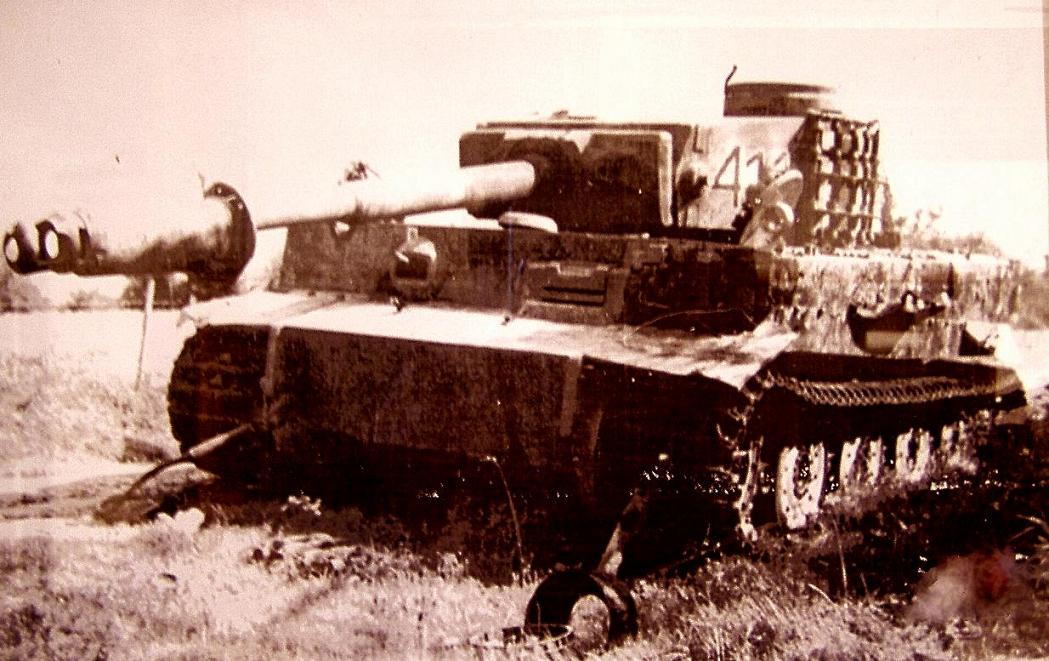
A knocked-out Tiger tank at Oberwampach, Luxembourg

Oberwampach
 
In 1936, Arnold Brown left his home in Cronos, Ky., with 50 cents in his pocket and an eighth-grade education, hopped a freight train, and enlisted in the Army. He was 18 years old. When I interviewed him in 1997, he was 80 years old, a retired colonel, and living in Owensboro, Ky.
During the battle of the Bulge, he was a captain in command of Company C of the 358 Regiment of the 90th Infantry Division. This is his story of the battle of Oberwampach, as told to Aaron Elson.


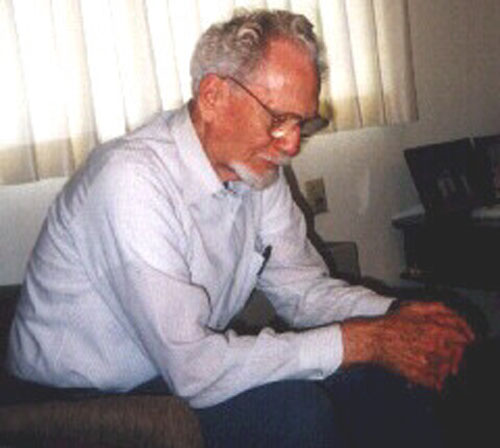
Arnold Brown, in Owensboro, Ky.

Arnold Brown


   The Battle of the Bulge began on December the 16th, when Von Runstedt started his assault.
   We were across the Saar River in Dillingen, and they decided that our position was vulnerable so they had us withdraw under cover of darkness. It was cold, with a freezing rain. We withdrew and occupied a position on land between the Moselle and the Saar rivers, and that’s where we had our Christmas dinner. Then we got orders to move and join the battle in Luxembourg, the Battle of the Bulge.
   We loaded on trucks and went up through those mountains, in the freezing cold.
   My first operation in the Battle of the Bulge was in the village of Niederwampach.
   A and B Company had attacked Niederwampach and were held up, so I was told to go around the left flank and attack from the rear. In a position such as this, I always attacked with two platoons forward and one in support. My position is always in between and slightly to the rear of the two attacking platoons, so I can keep abreast of what’s going on and if I need to commit my support platoon, I’ll know where to do it.
   In approaching Niederwampach, the two platoons split up a little bit, so the part of the village in my immediate front had not been cleared. I entered a building with my command group. When I say command group, that was just myself, my communications sergeant, the radio operator and my messenger. We entered the barn part of this building, and when I entered, I turned around and started to say, "I don’t believe there’s anything in here." There was a platform of hay on the right side. The platform was about waist high, and the hay was a little higher than that, and I saw this hay start to move. So we squared off toward the hay with our weapons, and a German said, "Nicht schiessen! Nicht schiessen!" which meant, "Don’t shoot."
   I said, "Hande ho. Hande ho." Put your hands up. So they put their hands up and came out and surrendered. There must have been 10 or 12 Germans.
   When they surrendered, there was another group of four or five men who came out from the stall behind us, and they surrendered. I heard a commotion over my head and I looked up and I saw there’s a German descending from his rafter, and I noticed that he had hand grenades around his belt, and he came down and surrendered.
   To this day I don’t know why they surrendered. I bring it out just to show you how lucky I was all through combat.
   I had my other platoons clear out the other buildings, and we captured Niederwampach.
   From Niederwampach, we were to go and take Oberwampach, Luxembourg.
   Before we left, the battalion commander informed me that the situation was serious, but it wouldn’t become critical as long as we could prevent the Germans from widening the gaps in our lines. They were sending me into Oberwampach, which was on the shoulder of this breakthrough, with the instruction to hold it at all costs. Don’t let the Germans widen the gap. That was my order.
   In moving across the open fields to get to Oberwampach, we came under machine gun fire from a position on our right front. So I told the radio operator, who’s carrying the SCR300 radio on piggyback right beside me, to call for artillery fire to neutralize this machine gun. This radio operator now is shot through the head and falls dead at my feet while I’m on the transmitter making that message. There are bullets whizzing around.
   We got this accomplished, but instead of getting artillery that time, we had a tank in support, and the tank took care of that machine gun nest.
   Another man picked up the radio for me and we took Oberwampach with very little resistance. It was about dusk, and before I got my security all arranged, a German halftrack towing a 120-millimeter mortar and a crew of 12 had moved into our midst. They moved into one of the buildings. They didn’t know we were there and we didn’t know they had moved in, until I sent my messenger back to one of my platoons, and he went to the building where this platoon had originally been. He opened the door, and it was full of Germans.
   Two platoons were going into position, so I took my other platoon and gave them the mission of knocking out these Germans, and I told everybody in the company to keep their heads down because we’re going to have a fight right in our midst.
   This platoon got in a semicircle around that building, and they opened up on it. They fired a few rifle grenades in it, and when the rocket launchers fired, one of these Germans put up a white flag, and they came out and surrendered. But only six of them surrendered. That’s what the Germans will do sometimes; they’ll surrender some while the others get away, and these other six escaped through the darkness while we stopped shooting.
   Well, these Germans were all 6-foot blonds, and they had Adolph Hitler shoulder patches. They were part of Hitler’s elite guard. In other words, up until this time they had been protecting Hitler’s headquarters, and this is the first time I guess that they had actually been committed to hard fighting.
   So we were literally fighting Hitler’s supermen. All the same blood type, so if they had to have a transfusion they didn’t have to check it out or anything, they’d just take one man to another.
   I questioned them, and found out that they were part of a panzer division that was moving into this area. Based on that information, I asked the battalion commander to send me some more weapons to defend against an armor type attack. He sent me up a platoon of tanks and a platoon of tank destroyers, and I deployed them. And it’s a good thing, because the Germans launched an attack at 3:30 in the morning. If we hadn’t rushed up those tanks and tank destroyers, they would probably have overrun us the first night.
   This position we had moved into gave us observation over one of the main routes the Germans were using that had our troops surrounded at Bastogne. So they sent elements of a panzer division to knock us out, and we ended up in somewhere between a 36 and a 72 hour battle, night and day. When the Germans were not making a ground attack, they were bombarding us with artillery fire and direct tank fire. All of their attacks were at night except one. And this was their last attack; I’ll get into that later.
   When these battles were going on two of my senior platoon sergeants came to me and they said, "Captain, this is the roughest that we’ve ever experienced." One of them said, "I think we had better withdraw; if not we’ll probably have to surrender."
   And I had to tell them that we’re going to hold until the last man. I was no hero. These were my orders. Knowing that at some time, if the Germans got these tanks into our position, we’re out of ammunition and there’s no way we could resist, then I would surrender or tell them to bug out. But I couldn’t tell these men that at that time.
   Now these sergeants were brave. They’d fought the Germans longer than I had. They’d fought the Germans in Sicily, in Africa, and now they’d been with me from Normandy in five major battles through the French Maginot Line, the German Siegfried Line, so they were just stating the facts, and I agreed with them. But I had to do what my job was at the time.
   So we did hold. And rather than go into a lot of these operations up until the last attack, it was either on the 18th or the 19th of January, the Germans made their main effort to overcome us, and they made this attack in daylight hours.
   They hit my right flank where this knoll was that I had a platoon, with four tanks and I estimate a platoon of infantry. Coming across a big long rolling ridge to our front we could count 11 German tanks. There was infantry riding on the tanks. There was infantry in halftracks following over this ridge just as far as we could see, and they were shooting everything they had while they were moving in.
   I got on the telephone with the battalion commander, and I asked him to give me all the artillery fire he had available. He turned me over to the artillery liaison officer of the battalion, and the liaison officer asked me to zero one gun in on this target. I had two observation posts set up, one in the right platoon and one in the left platoon, so through them we relayed information. We zeroed one gun in on this target, and the artillery officer said, "Fire for effect."
   He had nine battalions – that’s 108 artillery pieces – that hit that target at one time. You never saw such a slaughter in all your life. These Germans didn’t make a tactful withdrawal; it was every tank and every man fleeing for his life. Nothing could have overcome that. It’s impossible. My men were firing standing up, like shooting ducks in a pond, but the Germans were so far away they’d be lucky if they hit anyone.
   So the Germans withdrew and they didn’t fool with us anymore.
   One other incident took place that I think is of interest.
   I had my company command post set up in the home of a family in Oberwampach. We were in the home of the Schilling family. When the Germans were shelling us, a five-year-old boy got excited and dashed out the front door, right into the impact area of the artillery. A 20-year-old soldier dashed out to rescue the little boy. They were both mortally wounded.
   The soldier died, and asked someone to rub his left arm, he claimed it hurt him. I did rub his arm, and he turned blue and died.
   The little boy died slowly in his mother’s arms, and to see this – you read about these things, but to see the grief this mother was going through of her son being killed by something they had no control over, it really brings some strong lessons to you.
   This soldier’s name was Sergeant Whitfield. I recommended him for a decoration and he got it. Now he was a true hero. He gave his life trying not to defend his own life, but to rescue an innocent little boy, and truly he earned his decoration.
   He got the Distinguished Service Cross.
   After the battle, we also picked up a German soldier who had been wounded. He had been shot in the leg apparently with a .50-caliber bullet, and he laid out overnight in this freezing, subzero weather. Both his arms and both his legs were frozen stiff as a board. He begged us to shoot him. I couldn’t do it. I asked for a volunteer. Even if he survived, he’d have to have both arms and both legs amputated, and this could have been a mercy killing. But these battle hardened soldiers that were fighting Germans a few minutes before would not volunteer. One soldier, out of sympathy for the suffering and bravery of this soldier, lit a cigarette and held it to his lips. Another soldier brought him a hot cup of coffee and held it for him until we got the litter jeep up there and put him on the litter jeep and sent him to the rear. I’ve always been curious to know what happened to him, but I believe he would have died before they got him back to the aid station.
   After this battle, the division decoration board section came down and they said that with what happened down there the men deserve some medals. They said, "We want to write you up for a DSC."
   And I said, "No." I said, "Every man in the outfit deserves it as much as me and some of them more than I do," and I was really being honest about it. I wasn’t trying to collect medals. I was trying to save as many of these men as I could from getting killed in this terrible war.
 
- - -
 
   There will be more about the battle of Oberwampach from the perspective of the 712th Tank Battalion in my forthcoming book "The Armored Fist." Email me to reserve a copy. Thanks, Aaron Elson
 

See how you can help Oral History Audiobooks grow
 

Tuesday, November 20, 2012

Southbound Winnie and Southbound Peggy


The B-26 on which tail gunner John Sweren flew 58 missions.

   When Stephen Ambrose wrote that he felt like he developed post traumatic stress syndrome just by interviewing all the World War II veterans that he did, I thought, "What a crock." But I can understand where he was coming from, and I'm sure he was exaggerating a bit. And while I would never claim to have anything close to PTSD, some of the interviews I've done are veritable emotional roller coasters, going from laughing out loud to getting all choked up and vice versa.
   One such interview is the subject of my new Kindle publication, "Merry Christmas in July," an edited transcript of my conversation over two days in Mesa, Arizona, in 2009 with John Sweren.
   John's B-26 took a direct hit on July 28, 1944, and the tail section broke off with him in it. He managed to bail out, was captured and became a prisoner of war. One of the stories he told was how in Stalag Luft IV, he read a book called "Ordeal by Hunger," about the Donner party. Most of the other people in his room in the prison compound read it as well. When he was on the long POW march across Germany in February and March of 1945, he was so hungry one night that before going to sleep he told his buddy Lloyd Alexander that if Lloyd should wake up in the morning missing an arm or a leg, he'd know where it went. He meant it as a joke, but when he woke up his buddy was nowhere to be found, and he never saw him again. That should be humorous, but it always haunted John that his friend must have taken him seriously.
   John tells the story better than I do, which is why, when possible, I prefer to present the stories I record in the veterans' own voices or in their own words.
   The audio of John's interview is available from audible.com in a three-interview set titled "March Madness," and now the transcript is available from Amazon for its Kindle e-book reader.
   Here's an excerpt:

Aaron Elson: What about the first time you shot down a German fighter?

John Sweren: First time? I think it was an ME-109. They circled, and I opened fire before he did, and whether he fired or not I don’t know. I couldn’t tell you, there was so much debris in the air there when I hit it, and I didn’t know whether I hit it but they claimed I did, because in a box, you have six planes, three up here and three a little bit lower. So I’m not the only one that’s got a gun. Other people see the plane also. But that’s why I got a couple planes shot down and one probable. But when the plane was hit that I thought I hit, they claimed I hit it, and it just flipped over and down it went.

But, this is not my idea, on a .50-caliber machine gun there’s a buffer plate on the back with a cylinder on the buffer plate, probably two inches long or two and a half inches long, a Micarta disk, plastic kind of, so when the bolt would come back for the recoil – this was none of my idea but somebody said well, they put nickels in there. So I got some nickels from home, I sent for them. I put them in there, and every fifth bullet is a tracer, okay, when you shot, it looked like all tracers. The recoil was three times as fast with the nickels in there, because we’d come back sometimes, my boxes were almost empty.

Aaron Elson: So it would speed up the rate of fire?

John Sweren: Yes.

Aaron Elson: So the tracer was almost constant.

John Sweren: Yes. And I was, I don’t know who told me this, nobody followed up on it but I did, and my crew chief says, every time we came back he’d change the barrels, he says, it looks like a shotgun, no land and no grooves in there.

Aaron Elson: Because the heat was melting the ...

John Sweren: I didn’t know what it looked like too much in the daylight time, but one evening we had a late mission, and boy, I’ll tell you, in the dark, it looked like every bullet was a tracer. But that was my experience. Everybody didn’t do it but I did it, because somebody told me to put nickels in there, so I sent home to the United States and they sent me three rolls of nickels. I think I gave some to somebody else.

Aaron Elson: Would you have to replace the nickels?

John Sweren: They stayed in there all the time. The Micarta disk looked like kind of a rust color, about the same size as a nickel, but evidently there was some sponge there, give there, nickels, snap, snap, snap, so I know every mission the crew chief would check the barrels, wanted to know if I used it.

Aaron Elson: Now you had two kills and three probables, no?

John Sweren: No, I think two kills and one probable.

Aaron Elson: What was the second one like?

John Sweren: The second one was, we were, we always flew different boxes, had three boxes, you’d have a high box, a middle box and a lower box. The lower box was kind of a Purple Heart box. And I think the second one we were in the low box, and the plane kind of circled. I lost track of it, and it came up from kind of underneath and made a 90-degree turn and started firing. Of course my rapid fire I think got him, but he just, just a flash of light, that’s all, I couldn’t tell, I blew it up. But, uhh, but after that happened, I said a little prayer, God bless the guy, he was in the war just like I was, fighting for his country, and I felt sorry for what happened. It was either him or me. Or us.

Aaron Elson: Even though he was trying to kill you, you didn’t feel anger?

John Sweren: Well, I guess I felt anger at the time, but after it exploded, the anger went away and I felt sorry for him and his family, or loved ones. That was me mostly, I don’t know what the group that I was in, my acquaintances, my crew, and even other people that were on different aircraft, after the briefing, the woman pours drinks for you and then, at first I thought boy that’s got to be cocktail hour. They had a purpose for it, to loosen you up and you’d talk. But get to the barracks, and communications was very, we hardly ever talked about what happened. The people in my barracks, everybody kind of talked about something else. We played a little cards, we’d play on this guy’s bed, and we had some plastic cups there and we’d have a drink. Not everybody drank, but I did, quite a bit. Well, I came from a family that, we always had booze on the table and milk, nothing else, and my father said “Take your choice,” but I never drank anything until after the war. I didn’t know what liquor did to you but it does relax you. It put me to sleep a lot of times, because I’d have two or three drinks, and you could feel it, so I’d sleep pretty good. If I didn’t have anything to drink I’d toss all night, and dream about this and that.

Aaron Elson: You’d dream about the missions, in England?

John Sweren: Yes.

Aaron Elson: Now tell me about the time, Brett was telling me outside, that you had a couple of drinks and you fell asleep in a shelter and you woke up and the roof had collapsed on top of you, in London.

John Sweren: Well, it was not in a shelter, it was a house. This was in Rumford, England, probably around 75 kilometers from the base. I rode my bicycle that far. Seventy five kilometers is a guess on my part. So you’d see a sign in this yard, “room for rent.” I saw two of them and I saw this bigger house. I rang the doorbell or knocked, and they said yes, come on in. I introduced myself. Then I went kind of into Rumford, and I think into London maybe, London I think it was, and they had dog races. And all these guys up there, well, you’ve got to bet on so and so and so and so. I had a little paper there, a program, of the horses, I mean the dogs that were running, so I went up there. I already picked them out, Southbound Winnie and Southbound Peggy. I chose Southbound Winnie to come in first and Southbound Peggy to come in second, and it was just the opposite. They both came in. And, I don’t know, at that time the British pound was $4.05 US, so I had a whole sack full of money. They had a bar there, and of course I was drinking, and there was a flower shop. Before I got there I bought some flowers to take to the place where I was staying. There were two ladies there, a grandma and her daughter. So I bought flowers for them. Oh, they’ve got a tub there, I put the flowers in this tub. So after the race, I went to the counter and got my money, I don’t know how many pounds I had but quite a bit, maybe about four hundred dollars worth, so I got on this bus, and from the bus I got a cab, and I was pretty loaded.

I stumbled into the house there, and I brought the flowers in. On the way up the stairs, they had a beautiful vase, I knocked it down and broke it. And I said, “Ohhhh, I’m so sorry.”

“That’s okay. That’s okay.”

So they took me into bed, brought me some tea and some little cookies, and I passed out. Boy, I’d drank quite a bit, or it hit me a lot. So morning came, and I felt like there was lead on top of me. I opened my eyes, and I see daylight through the roof. It was all plaster on me. A buzz bomb had exploded nearby. How I made it I’ll never know, but after it was all over, the two ladies, I think one was 72 and the daughter was fifty something, she’d lost her husband in the war, so they thought I was gone because when they escaped out of the house, well, after it was all over there’s a little blank there in my mind, but when they came back, she said, “Johnny, the vase would have been broken anyhow.” She said “I’d sooner have you break it than doggone it, the Krauts.”

   (With special thanks to Christian Levaufre and Brett Schomacher, both of whom made my interview with John Sweren possible)

- - -
"Merry Christmas in July" is available in the Amazon Kindle store. If you order it, please think about leaving a review.
John Sweren, center, at the dedication of a monument in 2005 where his plane crashed in Fierville-Bray, France.


- - -


From Oral History Audiobooks:
From Chi Chi Press:
Got Kindle?


Please help Oral History Audiobooks grow