Showing posts with label Camp Seeley. Show all posts

Monday, March 5, 2018

Coming Soon: Tanks for the Memories 2, The Hospitality Room

"This is the only loving I get out here" -- Art Horn in a letter to his girlfriend.
  It's been a long time between posts. I've been working on a new book, "Tanks for the Memories 2: The Hospitality Room." This is a collection of stories, interview and conversation excerpts from the many reunions of the 712th Tank Battalion that I went to in the 1990s, until they stopped having them because the last few veterans were too frail to make the trip. It didn't help that two of the four who were at the final reunion were treated so badly in the airport where they had to make a change on a flight from Boston to Florida that they decided it would be their last reunion. I forget what year it was, but in the early 2000s, I think.
   Please keep an eye on social media (Facebook, Twitter, LinkedIn, my email newsletter, which gets posted on Facebook anyway) for further progress on the book. In the meantime, since I had such a wealth of material from which to draw, I'll be posting some "outtakes" from the many transcripts which have been hiding on my computer's hard drive for nearly two decades.
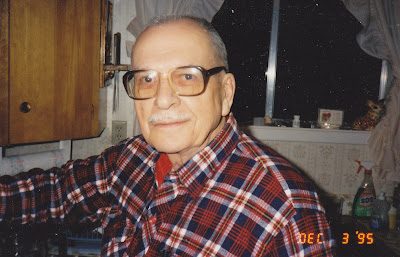
   The photo above is of Art Horn, who became a mechanic in D Company of the 712th Tank Battalion. Art sent the picture to his girlfriend Margaret, whom he would later marry, in Chicago, and it wound up in a newspaper, I'm not sure which one.
   While he was training in the horse cavalry, Art had a bit of a mishap on a horse. It was not the horse pictured above. During an exercise in which the trooper had to ride in a figure 8, shooting at targets at various points, Horn fell off the horse, struck his elbow on the ground, the pistol fired and the bullet struck the horse in the chin. The horse survived. I had heard about this from a couple of other former cavalrymen in the 712th, so I asked Art about it. This is what he said:

   "That was after six to eight months of training, the company commander gave an order to the stable sergeant to take certain horses away, we were gonna be firing on the range, and he says to put those in the corral and don’t let them on the line so that anybody could take one. But I think I got one. And I waited my turn. The biggest problem was that the rest of the horses were in the distance, they would stay there and each one of us would make these figure eights, run the figure eight, and this horse that I had, as long as I fired away from him, when I went around the other way to fire crossover is when it got too close to his ear and he bucked and he threw me on the ground. And when I landed on my back, my elbow hit the ground and I still had my hand on the pistol. The bullet went straight up. Because they always said when you’re on the firing range, when you’re not firing, always hold it straight up, because if I’d have held it off to the side I might have hit one of the men that were standing around.
   "So I did that. The horse stopped, and I got up and I looked and I noticed that there was a little blood coming down from his throat. And I looked at it, and I said, oh, the bullet hit the horse. But I also noticed on the halter on the horse there was a double leather thong that was underneath there. The bullet went through that, and then I found out later that the bullet only entered into the horse’s mouth, and when they got to the vet they were able to take it out and it healed up, and he was back in the saddle again."
Art Horn

Read the Original Tanks for the Memories  (free online at tankbooks.com)


Sunday, July 17, 2016

A gem of an interview from 2004

Eugene Sand, left, and Edward "Smoky" Stuever

    Over the years, as I attended reunions of my father's tank battalion from World War II, there were several veterans I would see almost every year. As a result, I interviewed some of them on several different occasions, sometimes recording a casual conversation in the hospitality room with other veterans at the table, at other times doing a longer, one-on-one interview. As a result, I would sometimes have several different taped versions of the same story, each time with a few more details, or, frustratingly, a few details that differed from the time the same veteran told the same story two years earlier, sort of a one-man version of "Rashomon." Once, for example, I was listening in as Jim Flowers told the story of Hill 122 to a youngster who came to the reunion with his grandfather. I had heard Jim tell the story dozens of times, but as he grew older, he would sometimes have to reach for a detail, which would result in a lengthy pause. At one such pause I provided the detail, which prompted Jim to admonish me by saying "Who's telling this story, me or you?"
   There was one veteran, Ed "Smoky" Stuever, who had so many stories, about growing up in the Depression as the son of two hearing-impaired parents, about helping to build the Skokie Lagoons with the Civilian Conservation Corps, about having his tonsils removed, about life in the horse cavalry, about repairing and changing engines on tanks, about the death of his buddy Marion "Shorty" Kubeczko, that I resolved to sit him down and get his story from start to finish, which I finally did in 2005, when he was 88 years old. One of my earliest recordings, going back to 1991 or '92, was his account of how he got the nickname "Smoky." He was in the veterinary detachment of the 11th Horse Cavalry in California in 1941. His lieutenant's wife gave birth one night so the lieutenant passed out cigars in the morning, and the men sat around smoking their cigars before they began working on the horses. There was one horse which nobody wanted to deal with because it had a reputation for meanness, but it had a "stub" -- I believe he meant a thorn -- in its hoof, and somebody had to take it out. So Ed said he would take it out. He then said, "Watch my smoke."
   He had the horse's leg cradled in his crotch and was about to remove the thorn when the horse suddenly lay down, causing Ed to turn his head. He still had the cigar in his mouth and the horse's side made contact with the lit end of the cigar. "Watch my smoke," Ed repeated at that reunion. "There goes Smokeeeey!" as the horse sent him flying into several bales of hay.
   It was only after I'd heard that story many times that Ed remarked that he never liked the nickname, even though at every reunion all the other veterans would still call him Smoky.
   That 2005 recording was one of the highlights of my so-called career as an oral historian. Ed filled two 90-minute cassettes, then we broke for a battalion luncheon, and when we returned he filled another 90-minute tape. After digitizing and transcribing it, I realized there were several stories he didn't even cover, but that I had on earlier tapes.
   My New Year's resolution this year was to go through my old tapes and digitize some of the ones that I'd overlooked over the years. I digitized and transcribed two interviews -- with Bob Hagerty and Morse Johnson of A Company -- in January and here it is the middle of July, but this month I got back to keeping that resolution, and just the other day I discovered a hidden gem among my 600 hours of interviews.
   I didn't realize, or had completely forgotten, that the year before that 2005 session with Ed Stuever, I had interviewed him at the 2004 reunion. His daughter, Rita Cascio, was with him and she helped with the interview by asking him to provide some details which he might have overlooked.
   Ed Stuever passed away in September of 2014. He was 97 years old.
   Following is the audio of that 2004 interview. The full three-hour 2005 interview is available in my collection of "More Tanker Tapes," in my eBay store.


   Purchase "More Tanker Tapes," which includes the three-hour 2005 interview with Ed Stuever, in my eBay store.

   Thank you!

(Ed Stuever passed away in September of 2014. He was 96 years old.)
Edward H. Stuever beloved husband of the late Genevieve (nee Schmitt); devoted father of Tom, Mary, Rita Cascio, Therese, and Lora (Steve) Hall; dear grandfather of 10; great-grandfather of 15; great-great-grandfather of four. Edward was a US Army veteran of World War II and the founder of Stuever & Sons Draft Beer System. Funeral Monday, 11 a.m. from Salerno's Rosedale Chapels, 450 W. Lake St. (¾ mile west of Bloomingdale/Roselle Road), Roselle, to St. Matthew Church, Glendale Heights, for Mass at 12 noon. Interment Elm Lawn Cemetery. Visitation Sunday, 3 to 9 p.m. at the funeral home. Please omit flowers. For information, 630-889-1700.
Published in Chicago Suburban Daily Herald on Sept. 6, 2014 - See more at: http://www.legacy.com/obituaries/dailyherald/obituary.aspx?pid=172371586#sthash.QQZqA1Yq.dpuf

Saturday, November 23, 2013

Handlebar Hank

Dale Albee in 1995
   Coming soon: "From the Cavalry to Czechoslovakia: A 712th Tank Battalion Interview with Dale Albee"
   I visited Dale in Prospect, Oregon, in December of 1995. He was a platoon leader in the 712th, with which my father served. Dale was a sergeant in the third platoon of Company D, the battalion's "light" tank company. He eventually received one of the 14 battlefield commissions.
   The audio of Dale's interview is in my original audiobook, "The Tanker Tapes." I decided to make an edited transcript of the interview available as the next installment of my series of 712th Tank Battalion Interviews.
   Here's an excerpt. Please watch for the release of the full interview at Amazon.com and for Kindle, and check out "Big Andy," my interview with tank driver Bob Anderson of A Company in the 712th.

  Handlebar Hank

From "From the Cavalry to Czechoslovakia" (c) 2013 Aaron Elson

 Aaron Elson: Now, what exactly happened in Binscheid?

Dale Albee: All right. It was in February, after the Bulge. We had been sent out, and I was working with Mike. I may be wrong, but I think the 4th Armored was going down the main road, and we were going off to the side to clear villages like we normally do, keep everything clear on the flank. And we came up to this little hill and stopped. Old Mike motioned to me to come forward, so I dismounted and went up, and we looked out. Binscheid was over here, the town. The road came down around this way and came into the town. And in this field out here there’s a creek, right here down below this little bluff. In this field out here is Germans all over the place, with their holes dug and everything just walking around. They didn’t even know we were there.
So we figured, well shoot, this is like most of the other towns, they’ve got them out to protect the town. We called back for infantry, and waited for about an hour and a half, and they sent the infantry up. They sent 15 green infantry. Handlebar Hank, I’ll never know his name and I wish I knew it because bless his soul, but old Handlebar Hank, the sergeant, was the only oldtimer. He had a big handlebar mustache and his name was Hank, that’s the reason we just called him Handlebar Hank. So Mike said, “If I send jeeps, anything can knock them out. How about if you lead out and go down the road, I’ll fire for support here and then I’ll get the support down to you right away, and then we’ll fan out and go on into the town.”
Okay, fine. So we got all set, and I took off in my tanks and went over the hill and we opened up on these guys here and we gave the infantry  time to get around and get in position so they could sweep around this way and then protect me as I came over the hill.
We sailed over the hill and went around, and opened fire. I went down this little dip and just went up, and oh, just topped the rise, and I was planning on stopping just beyond that rise and opening up. Well, right there is where I set off the mine. And it knocked our tank out. So we dismounted and got behind the tank. There’s a damn machine gun right straight ahead of us firing on us but we all got behind the tank, and I hollered, “Send up my second tank!” The second tank came up right in my tracks. And they got up maybe twice as far as from here to that bush from me, and they rolled across and all of a sudden there’s the damnedest explosion.
Later on we learned that what it was was the Italian box mine, and what it does, it’s a big box that goes across the road, and then it’s got two cutters. And when you roll across that it cuts a wire and sets off the thing.
Evidently, the light tank wasn’t heavy enough to cut it completely, so when they rolled over they cut it. When that exploded, it blew the whole bottom of the tank in, and of course stopped the tank right away. So I ran over, and the hatch was blown loose, threw it up. Slick was the driver, I knew he was dead because he was just kind of slumped forward, and the whole back end of his head was gone. And his back was just shredded. And the little assistant driver, he couldn’t stand up. So I grabbed him under the arms and pulled him up, and just threw him over, and then ran up.
Murphy was crawling out of the turret by that time, and I just helped him out, and Holt was trying to get out. And then like a goddamn fool...

Aaron Elson: That was Holt in that tank, too?

Dale Albee: I think it was. I have to check, but it just seems to me that poor old Holt, that was the third time he was wounded. But I know Murphy was in there.

Aaron Elson: Now how did you go into the tank?

Dale Albee: I didn’t go in. I just ran up on the front slope plate, and stood right there, like this is a hatch right here, and this is the driver, I knew he was dead, so I just stepped over here and here’s the bow gunner. I grabbed him, and where you get the strength I don’t know, but I pulled him up, and his legs were broken I don’t know how many times below the knees, and that’s the reason he couldn’t stand up to get out. And then I just ran up here, and right here is Murphy, and helped him over, and then I saw Holt was getting out, and I’m pretty sure it was Holt. And then instead of jumping behind that tank, I turned around and ran back to my own tank, behind it.
Handlebar Hank was laying in the road. That explosion of the second tank knocked the living daylights out of him and he just kind of jumped up and then fell, and this damn machine gun opened up, and you saw the tracers come by here like that that missed him. And then the second time he came back it walked right up over his shoulder.
I ran back, got Handlebar Hank, pulled him over and got him into the ditch between me and my tank. And then we called for artillery support because I knew we couldn’t do a damn thing, and there’s two Germans right in here, we knew they were there, so, you know, the old “Kommen Sie Hier Macht Schnell Mit der Hande Ho Oder Ich Schiessen.” We captured those two Germans. They came running over. So we called for artillery.
In the meantime, the Germans started throwing artillery in on us. So I called back and said, “Send us help,” for support, to get the wounded out. And the fences there were these little, kind of like a pole fence, so what we did we’d reach up and grab those poles, put two down like that and we took our coats off and our tanker's jackets and run the sleeves through it, we made stretchers. And I had to call back and had Pat [Shortall] just start backing up, and I think Holmes was the one behind him. I had them back up and open fire to pin anything down here and then we got everybody out of there that was wounded. We made the two PWs help us carry them. And the last time I saw Handlebar Hank, we radioed back and they sent a medic jeep up, and old Handlebar Hank was laying on a litter on this medic jeep, he had a cigarette, his hands all bloody and blood all over, puffing, and he looked over at me and I said, “How are you, Handlebar?”
He said, “I got me a million dollar wound. I’m going back to the States.”

- - - 
 Now available
Kindle               Paperback

Read the full transcript of my interview with Dale Albee in the interview section of tankbooks.com. Full audio of the interview is included in The Tanker Tapes, available on eBay

Paperback          Kindle


Sunday, January 23, 2011

Clip of the Day: Tonsillectomies

Art Horn at Camp Seeley, California

The inscription on the back of the photo, which Art sent to his girlfriend

In 1941, some 500 recruits from the Chicago area were sent to Camp Seeley, California, to fill out the ranks of the 11th Cavalry. Two of those recruits were Art Horn and Ed "Smoky" Stuever.

For some odd reason, Stuever in recent years came to dislike his nickname. Nevertheless, he always loved to tell how he got it. When he was working in the veterinary detachment, a horse was brought in with a thorn in its foot. Stuever's lieutenant had just become a father and passed out cigars, and Stuever went to remove the thorn from the horse's foot while the cigar, lit, was in his mouth. The horse shifted and its thigh came in contact with the business end of the cigar, and the next thing Stuever knew he was flying through the air. "There goes Smoky!" one of his colleagues shouted.

Interestingly, there was a popular comic strip at the time called "Smoky Stover," and I've often wondered if that didn't have something to do with his being given that nickname as well.

At one reunion, Stuever and Art Horn were reminiscing, Stuever about his days in the Civilian Conservation Corps and Horn about his time in the cavalry, when the subject of tonsils came up. Which leads me to today's "Clip of the Day." Be forewarned, however, this story is not for the faint of heart.

Clip of the Day: Tonsillectomies