Showing posts with label combat stories. Show all posts

Saturday, July 28, 2012

General Patton at the Crossroads

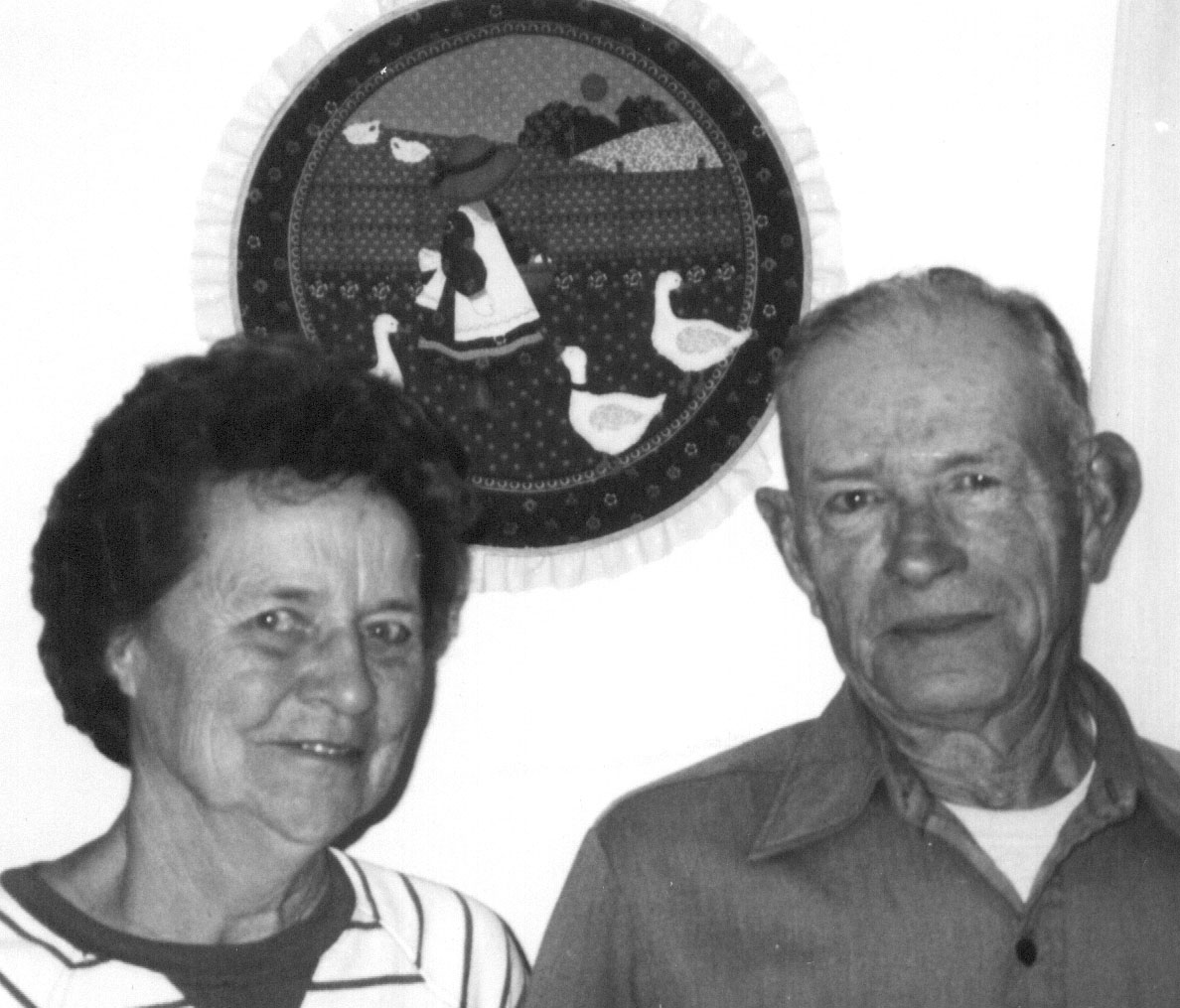
Suella and Russell Loop

   In my Oral History Audio CD "Encounters With General Patton," I included an anecdote related by Russell Loop when I interviewed him at his home in Indianola, Illinois, on Oct. 24, 1993.
   I might note that I almost didn't get to interview Loop, who, in his mid 70s at the time, was a farmer. I have somehow managed to get lost in almost every state in the nation. I even got lost in a parking lot, but if you've ever been to the Drawbridge Estate in Fort Mitchell, Ky., you might not be judgmental. And once in my travels when I was visiting my brother in Minneapolis and proceeded to visit a cousin in Madison, Wisconsin, I got off the highway to get a cup of coffee and managed to get back on headed west. The first few times I saw signs telling me how many miles it was to St. Paul, I thought, gee, I didn't know there was a St. Paul in Wisconsin.
   I can't think of a time, however, when I've been more lost than when I was on my way to visit Russell Loop and hs wife, Suella.
   He told me to get off the highway, look for a certain convenience store, take a road all the way to the end, make a right, and take that road to the end.
   This was farm country, and somehow the first road I took didn't end until I was probably in the next county, but what did I know, there was the end of the road and I made my right and drove for several miles until I finally came to a house with the number of Russell's house, and it's not like there were any streets signs along the way. I rang the buzzer, and a young couple with a baby came to the door. This must be Russell's son or daughter and grandchild, I thought. Except they had no idea who I was talking about. But they explained that Indianola was back the way I came, so I doubled back to the convenience store and called Russell, and this time I got it right.
   All that, of course, is not on the CD. What is on the CD is the part that follows my asking Russell "Did you ever see Patton, up close?"
   "Yes," he said. "Real close. We had just pulled up on a four-way crossroad, which was a hard road, and pretty nice roads for back that time. And we had not met any resistance there. But we had just pulled off and was waiting for further orders, and here comes Patton and his jeep, and his driver, and he just more or less walked by the officers and went around and shook hands and talked with nearly every one of the enlisted men. And while he was there, there was a German plane that strafed that crossroads both ways, twice. And he just looked up and said 'They must know I'm here.'
   "That's all he said, about that. But what he wanted to know was, 'Are you getting plenty to eat? Are you getting enough ammunition and gasoline? And is there anything that I can do to make it better?'
   "And of course we all said 'Yes, send us home.'" -- Russell kind of laughed when he said that -- "But I did, I got to shake hands with him on the front line.
   "He was I suppose by far the best officer we had. He got the job done. He didn't give them time to get set up and ready for us. He kept them out of bounds. And I think that was the whole deal, really, myself. I think that's the reason we got as far as we did as quick as we did. Of course, we were clear across Germany and Czechoslovakia when the war was over."

   Another time I got lost was in Albuquerque, New Mexico, looking for the home of Lex Obrient. Come to think of it, this one may even beat my search for Russell Loop, because I never did find Obrient's home; he lived in a cul de sac in one of the communities that seem to ring Albuquerque, and I drove around for a couple of hours before finally abandoning my quest. This, too, was in 1992 or 1993. I did keep in touch with Obrient's son, however, and in 1999 when I went out to Albuquerque to interview Vincent "Mike" McKinney, whose interview is included in my audiobook "The D-Day Tapes" and my Kindle book "Conversations With D-Day Veterans," I finally found Obrient's house.
   It wasn't until today, however, 13 years after that interview, while reviewing material for my forthcoming book "The Armoured Fist," which will be published by Fonthill Media, that I realized that Lieutenant Obrient (he later was a colonel with an engineering unit in Korea) was Loop's platoon leader for a while. Obrient was in D Company, the 712th Tank Battalion's so-called "light tank" company, while Loop was in C Company and my principal reason for interviewing him was because he was one of the tankers involved in the battle at Pfaffenheck, Germany, on March 16, 1945. But Loop started out as a gunner in D Company and later transferred to C Company's second platoon.
   As in many of my interviews, the subject of General Patton came up, and Obrient related one of the many colorful anecdotes I've been fortunate about front line encounters with Patton.
   "At Mortain," Obrient said, "my platoon was right there at the crossroads at Mortain. Lieutenant Godfrey's platoon went around where the cross-section was and he went down that way, and then Harry Coe (Eugene Godfrey and Coe were the other D Company platoon leaders at the time) went down even further. So we're sitting there, and just playing a flank guard for anything that was coming because they were getting ready to move the 2nd Armored, I was told, the 2nd Armored Division was getting ready to come through. But before that, here comes Patton down the road with his whole staff of officers, and three or four jeeps behind him. So he’s coming my way, and when I got up there and I reported to him, he returned it and said hi, and shook hands real quick, but he didn’t want to talk to me. He wanted to talk to my sergeants with the other tanks. And what he wanted to know was if they really understood what was going on. And he was very satisfied with what he heard. I mean, they told him, we’re here, and this is what we’re here for, and this is what we’re doing. He immediately left and I called on the radio and I told Gene about this. I said, 'Gene, you’re about to have some very special company. It won’t be more than two or three minutes.'
   And he said 'Thanks.'
   Sure enough, Patton went on down there, he talked to Gene, and he went down and talked to Coe, as I remember. But then we saw him come back. And then a funny thing happened. We got strafed. I don’t know how the Germans would have found this out, but I kind of feel like somebody had tipped them off that hey, I guess you couldn’t miss it, I mean gee, Patton with his brilliant, shiny helmet and dressed to perfection. Okay, that’s the second time I met Patton. I’m glad you brought that up. That’s what happened. Did Andy (Schiffler) tell you anything about that?"
   "No," I said. "You know who told me about that? Russell Loop. Do you remember him? He transferred to C Company, but he said that once Patton came up and spoke to the enlisted men. He was a sergeant, and you know, he bypassed the officers. So that would have to be the same, because he started out in D Company."
   "Russell Loop?" Obrient said.
   "Loop," I said, "From Indianola, Illinois."
   "Ah, yes, I remember him," Obrient said. "But you know something else that I don't know if Andy told you about, there was a woman there with her children in a house close by. And of course, this is one thing Patton insisted on, "Don’t you take any food from any of these people. You have what you need. Leave it alone." So I felt real sorry for this woman and her children. And we had fruit, we had some apples and we had oranges, and those children, they hadn’t seen any candy at all. Well of course all the candy we had was that D-bar, that highly concentrated chocolate, so I tried to tell her, listen, these are for your children, because I knew they hadn’t had any food there, I was told that they hadn’t had any oranges or apples, they didn’t know anything about any of that. And above all, they hadn’t had any chocolate. So I think Andy was one of them that gave her the chocolate.
   "So you know what she did? She was so grateful, she went and killed a couple of chickens, and boy, I thought, no ma’am, don’t do that, uh-uh. But she did anyway, and they came out there, and this is just before Patton showed up. So what we did, they had it on one of these oblong plates and cut up, I said 'Jesus Christ, we’re all gonna be in trouble.' So we took it, and thank God he didn’t get close enough to notice it, but we pushed it in under the bogey wheels and the track and covered it with jackets and so forth. Of course he wasn’t there long. Thank God he wasn’t. He just was in and out. So when he got out of there, I took that chicken and said, "Ma’am, please, for God sake, take that back, don’t do that." So we made her take it back. But if he’d have found out, I hate to think what would have happened. But he was real fast. He came up, and I bet he was gone in less than a minute and a half. But that’s what he wanted to do. He wanted to talk to the sergeants and the other enlisted men that he could talk to.
   "So that’s the second time I saw General Patton, right there. The first time was on the hills in England, and then the second time I saw him was there. And then we saw him again up in the Battle of the Bulge, but I didn’t really get to say anything to him. I just saw him, and he went right on. It was fast. And then the last time I saw him, the war was over and we were in the theater at Amberg, and he came around and he talked oh, maybe ten, fifteen minutes, with as many troopers as could get in that theater. That was the last time I saw him, of course you know what happened to him after that at Mainz. No. Yeah, Mainz, that’s where it was [actually near Mannheim]. He was in his staff car and he was waiting for a train to go by, and these guys had been drinking, and they drove a two and a half ton truck into the back of him and broke his neck. You know that part, I’m sure."


   Watch for more information about and excerpts from my forthcoming book, "The Armoured Fist," from Fonthill Media. That's Armour with a "u" because Fonthill is a British publisher, besides, I do seem to have a small following in England and Australia, although I have no idea how Australians spell armor.
   My original Oral History Audiobook "The D-Day Tapes" is available from Amazon.com for download or on CD from eBay, and "Conversations With Veterans of D-Day" is available for Amazon Kindle.

- - -
From Oral History Audiobooks:
From Chi Chi Press:
Got Kindle?


Tuesday, July 10, 2012

Five D-Day Veterans Talkin' "Saving Private Ryan"


   Sometimes in an interview or conversation I'll get what might be called a little bit of ancillary history, one historical episode, that is, connecting with another.
   For instance, when I was transcribing my interview with James Finn, a veteran of the 294th Combat Engineer Battalion, I was somewhat agitated by the fact that Jim's wife was in the next room talking on the phone. And talking on the phone. And talking on the phone. And the tape recorder was picking it up as background noise, causing too great a distraction for me to use the interview in one of my original oral history audiobooks. To further exacerbate the situation, Jim's wife was not only talking on the phone through much of the interview, she had either a television or radio turned on.
   And then, during a lull in the interview, I could hear more clearly the sounds coming from the next room, and I realized that the TV or radio was broadcasting a basketball game. Not only that, but it was a New York Knicks playoff game. One minute while transcribing the tape I was frustrated as heck, and the next I was thinking, a Knicks playoff game, how cool is that!
   Or the time I was visiting Forrest Dixon at his home in Munith, Mich., around the time of his 80th birthday, and all over the television was the scene of a fallen Ranger being dragged through the streets of Mogadishu, which upset Forrest terribly. And just by happenstance it was around the first anniversary of the 9/11 attacks that I interviewed Nick Paciullo, a 4th Marine Division veteran of Iwo Jima, and he spoke at length about the episode of post traumatic stress that anniversary brought about.
   When I interviewed a group of veterans of the 299th Combat Engineer Battalion in Ithaca, N.Y., in 1998, "Saving Private Ryan" had recently been released. Sure enough, the subject came up in conversation.
   
Jim Burke: The actual D-Day scene was noisy, that’s all I can remember. I don’t remember anybody saying anything I could hear.

   Chuck Hurlbut: He tried to make it (“Saving Private Ryan”) that way because that’s the way it was.

   Jim Burke: That’s what I’m saying, it’s pretty typical. That’s what was so authentic about it, that’s all.

   Chuck Hurlbut: The first half hour. If anybody asks me I say the first half hour was true ...

   Tony DeTomaso: But the rest was all Hollywood after that.
  
   Chuck Hurlbut: I was so sad he got killed. I thought he’s a good egg. If it was a Hollywood film, he would have come home a hero.
  
   Jim Burke: Yeah, but did you notice, he had to put his captain’s bars on his helmet. That’s Hollywood too. Most guys took those emblems off real quick.

   Chuck Hurlbut: I remember seeing a lot of them.

   Jim Burke: Before the invasion or after? During the invasion you didn’t. They took them off.

   Bill Secaur: You know that Ryan, you remember, he’s from Syracuse, his cousin.

   Jim Burke: Tommy Niland. We had him at our 50th anniversary.

   Bill Secaur: That’s right. From Syracuse.

   Jim Burke: He was in the 101st Airborne and was a cousin of the real life Ryan.

   Jim DePalma: The real family was from Buffalo, right?

   Jim Burke: Tonawanda. And this guy was too. Tommy Niland was basketball coach at LeMoyne College for 25 years, maybe.

   Chuck Hurlbut: I thought it was so impressive, what really got me, it opens up in the cemetery with the old guy, then at the end, he becomes ...

   Jim Burke: That was pretty clever.

   Chuck Hurlbut: This is Private Ryan as an old man. Then at the end you saw the young guy. Now tell me, any of you guys ever hear Fubar?

   Jim Burke: No.

   Chuck Hurlbut: Fouled up beyond all recognition. They used it in the movie.

   Jim Burke: Maybe the Rangers had it.

   Chuck Hurlbut: I can’t find a guy that ever heard it. I never heard it. We had snafu. You heard that every ten minutes.

   Tony DeTomaso: What was the name, fubar?

   Jim Burke: F-U-B-A-R

   Tony DeTomaso: Yeah, but that’s just the initials. Well, you know what they were saying, don’t you? He just told you.

   Chuck Hurlbut: Fouled up beyond all recognition. Like a snafu. Situation normal all fouled up.

   Jim Burke: That’s why they had that little clerk guy running around trying to find, he’s an interpreter for Germany, he says “I never heard a German word like fubar.”

   Chuck Hurlbut: I never heard it.

   Jim Burke: Nobody did. It might have been a Ranger thing.

   Chuck Hurlbut: Now another thing about it. One of the guys gets hit. He’s laying out there and they’re all putting sulfa on him. Then they take the canteens and they wash it all off.

   Jim Burke: Getting the blood off.

   Chuck Hurlbut: Why wouldn’t that wash the sulfa off? I couldn’t understand that.

   Jim Burke: It probably did.

   Chuck Hurlbut: Every five minutes, washing him off and putting sulfa. I can’t understand that.

   Jim Burke: It was dramatic, wasn’t it? That’s the idea.

   Chuck Hurlbut: Yeah, but it seems so foolish, put the sulfa then wash it.

   Jim Burke: Yeah, but when you’re trying to simulate combat it’s all screwed up.

   Chuck Hurlbut: I guess.

   Jim Burke: Everybody’s excited.

   Bill Secaur: Actually, what we took off the boat, it never showed them taking little boats off the landing barges either in that movie.

   Chuck Hurlbut: Well, they couldn’t do everything.

   Jim Burke: You didn’t see any engineers, though, either. Did you notice, those obstacles were up in the water pretty good. This is after the tide’s come in. Quite a bit later. this is the third or fourth wave.

   Bill Secaur: You know what I can’t understand? Why they give the combat infantry badge just to the infantry. You know, we did a lot of infantry work.

   Chuck Hurlbut: We should have that. Or its equivalent. The medics got it.

   Aaron Elson: I can’t imagine the combat engineers not getting combat infantry badges.

   Jim Burke: I don’t think we should, though.

   Tony DeTomaso: Why?

   Jim Burke: You can’t compare your little infantry stint with a guy who’s been there for 30 days in a ...

   Tony DeTomaso: We didn’t get the credit we should be getting.

   Jim Burke: You don’t deserve a combat infantry badge either. That’s their thing.

   Chuck Hurlbut: When the infantry guy in the rear echelon back in Paris gets it ...

   Jim Burke: That’s their problem.

   Chuck Hurlbut: I want it.

   Tony DeTomaso: Look at the glider pilots. They didn’t get no jump ...

   Jim Burke: No, but they got a pin. There’s a combat engineer’s badge, probably. I don’t know.

   Chuck Hurlbut: There should be. There is none to my knowledge, but there should be.

   Tony DeTomaso: We did a lot of infantry work.

   Jim Burke: What, a day, two days?

   Bill Secaur: Regardless, you’ve got to build bridges and be the last one out and blow them up, too.

   Chuck Hurlbut: How about the Prum River? We’re down putting the damn footbridge, the infantry’s lolling up on the bank waiting for us. They’re all getting the combat infantry badge. I’m not.

   Jim Burke: No they’re not, not for that. Thirty days on the line. You talk to the guys up there at Aachen, when they can’t talk straight, their eyes are bugging out of their head, they’re so damn tired and disgusted, they’re the guys that deserve the combat infantry badge.

    Tony DeTomaso: They deserve it, no question about it, but so do we.

   Jim Burke: You know what happened to us up at Aachen? They were posting signs, one mile, two miles, six miles. All of a sudden these guys stopped us. They were the 1st Division. That’s their blockade. Their roadblock. They said “You can’t go in there.”

   I said “Why?”

   They said “We haven’t taken it yet.” And we’ve got signs, we’re supposed to go down in the middle of town and then start out.

   Bill Secaur: That movie with Telly Savalas where he was a tank guy, the guy was dressed like an American soldier and he was German, and all of a sudden they asked him a question, and right away Telly Savalas, he knew darn well the guy was lying. And he changed the signs around.
   Jim Burke: They said “You can go in there if you want to, but until they come back, we don’t know what’s down there. And those guys were excited, those infantry men are terribly distraught. I couldn’t get any sense of them.

   Tony DeTomaso: Most of them are replacements.

   Jim Burke: And they’re just like the cartoons, grizzly and dirty and they haven’t been anyplace except in that friggin line, and they’re sick. They’re really sick. It’s a wonder they don’t shoot each other.

   The full conversation, and several others is available in my new book, "Conversations With Veterans of D-Day," which is currently available in a Kindle edition only. I hope to have a print edition soon.


- - -
http://www.oralhistorystore.com

Check out some of the audio from the Oral History Store:


From Chi Chi Press:


Got Kindle?


Thursday, July 5, 2012

'Who Needs It More, Him or Me?"


The Landsberg concentration camp memorial

Here is the story from my new book, "Conversations With Veterans of D-day," to which I referred in my previous post. Len Goodgal is a 101st Airborne Division veteran of the 506th Parachute Infantry Regiment, whose I Company often fought near or alongside the fabled Easy Company of "Band of Brothers" fame. There but for a couple of letters you might have seen this story on HBO or read it in a bestseller.

I've included a little more of the interview. As I mentioned in the previous post, on D-Day Len landed in the water near the base of Pointe du Hoc and scaled the cliffs with the Rangers. This story occurs much later in the war.
  
Aaron Elson: You mentioned Landsberg Prison.

Len Goodgal: Yes, they liberated Landsberg Prison. I didn’t see the prison. I saw the prisoners. I’ve got an interesting story about that, because when we liberated Landsberg I was right outside the town. We were in a machine gun position with Eddie Austin, and we had three of these refugees with the stripes, you know what they looked like. They were Russian I think. I don’t know whether they were Jews or not, but they looked horrible. I mean, they looked nightmarish. And us guys, we were trying to feed them something. We had D-ration bars we were putting into our canteens and heating them with water, and we had some pickled eggs we used to find in the basement, and some bread that we grabbed from someplace, and a couple of things, I don’t know what the hell we had there, we’d find stuff in cellars.
These guys wanted something to eat, which we were trying to feed them, some of the cocoa. And this guy was shaking. Eddie Austin took his coat off and gave it to one of these guys. And Jesus, I almost flipped. I said, “Are you out of your mind? What are you doing? Giving away your overcoat?”
He said, “I can’t not give it to him.”
I said, “What do you mean you can’t? They’ll bust your balls for that.”
He said, “Who needs it more, him or me?” He or I. Him or me. “Who needs it more, he or I?” is correct. He said, “Who needs it more, him or me?” Eddie Austin was a superintendent of schools in California later on, but that’s besides the point. He knew what he was saying, “Who needs it more, him or me?”
“I don’t know, Eddie,” I said. “They’re gonna bust your balls.” Until my dying day I’ll never forgive myself for not giving the other guy my coat, but they weren’t shivering. This guy was really shivering. I didn’t feel bad. I said, “I think you’re out of your mind.” I said, “Eddie, what’s it gonna do for him? Put him in a house someplace and build a fire.” We had a fire going there. We fed them. They couldn’t eat the stuff, it was too rich for them. The Red Cross got ahold of these guys and took care of them. In fact, the Red Cross MPs came in to most of these camps. At Dachau they got in right away. They didn’t let us in. We went right past Dachau. I didn’t see them. I mean, they didn’t let them out of there. You would see guys roaming around if they did. We picked up a guy going through Germany, and he went all the way to Berchtesgaden with us, and the cook took care of him. Maurice. I don’t know what his last name is. He spoke about five languages. He’d been in a concentration camp for years. He was a skinny guy like that. And he had a horse and wagon, and anything he could steal he put in there. He and the cook were, I don’t know if they were chopping people’s rings, I don’t know what the hell they were doing, but they were getting enough loot to live for the rest of their lives. I mean, Maurice was helping him. And the cook used to carry a .45 pistol on him, I remember, all the time. And he was a pretty good guy, just gung-ho. Till he became the cook. How he got to be our cook, we had a guy named Feoli who was a cook and he shot his dick off in Holland because he fired his pistol while he was cleaning it. Feoli. He lives in New York State someplace. His .45 went off and it shot his dick off. I remember that, and oh, we laughed about that. Well, you know. What is it, pathos or something, I don’t know what the hell you call it. It’s funny as hell but when you think about it, in other words it’s not funny. Oh, it was brutal. We’d look at each other and laugh. “Don’t give me no pistol.” We used to pick up pistols, P-38s and Lugers and all different kind of weapons, Schmeissers and stuff. Most of them disappeared or we traded them along the way.
Some of the guys came back with them. Most of the guys didn’t even come back with a pistol, on account they were afraid they’d use them. Some of them just didn’t want to have them around. Weapons didn’t mean anything anymore. Glad it was over. But I remember us being in Solfelden, and they had horses there and we were horseback riding, German horses, and we used to go horseback riding in the afternoon or in the morning. They had guys that knew about horses taking care of them. To me it was a novelty. It was recreation. I was there from May, the war was over May 8th, I was there from May till September, and hey, it was a walk in the sun being a soldier. Just imagine how we felt over there. Anything you wanted to do. If you wanted to fraternize, and you weren’t supposed to fraternize with the Germans – everybody had a girlfriend someplace. Everybody. I can tell you an interesting story. I read Solzhenitsyn’s Gulag, I don’t know if you’ve read it. You’ve got to read it. It’s brutal reading. You’ve got to read that book. And in it he talks about them returning slave laborers, women, back to Russia, and the Russians  sent them to Siberia. When I was in Berchtesgaden, we used to use them, they were working as cooks and stuff for us because, hey, the Germans don’t want them anymore, they got captured, were working in the fields at home, in the hotels, hey, so the government took care of them. Then one day they came along, they took them all, put them on trains and sent them back to Russia. Solzhenitsyn talked about them, taking those people and putting them in Siberia. And I didn’t know. I thought they were going home. And they didn’t really want to go home, a lot of them, because, hey, when you see Russia, what it was about, and you see what Germany was like in Bavaria, even with the work that went on. Hey, it was a better life in a lot of ways, and some of them lived with German guys.
We had thousands of troops surrender to us coming off the Russian front. They wanted us to turn around and fight the Russians. They came in with all their equipment, ready to fight. They would turn around and they were gonna fight with us. They put them in camps. We did not abuse them. They talk about starving them to death. Eisenhower did not do that. Whoever wrote that stuff is a brutal liar. We did not brutalize the Germans, although there was high unemployment among them, there was not work and all that. We did not starve them or brutalize them. We weren’t allowed to do that.

Aaron Elson: Back to Landsberg, was that a concentration camp?

Len Goodgal: Yes, it was a concentration camp there and a prison. Landsberg Prison is where Hitler got his start, I think, one of those places. They had the putsches there. Beautiful area. Berchtesgaden, and that area through there, is probably one of the most beautiful parts of the world. You have to go to see it to see, July and August, where’s it’s warm and sunny and the fields are growing, there’s snow on top of the mountains and it would melt and we’d come the next day and clouds would go over, there’d be snow on the mountains. A gorgeous, gorgeous countryside. And they kept it nice, too. The Germans are meticulous. Clean. You can’t believe that these people were Nazis, and how brutal they were. Committed all these brutal acts. When you know the people. Germany was a country of kinder, kirche, kuchen. Children, church and cooking, that’s what a woman’s job was. Children he made, women and children for the Reich, screw the church, and fuck the soldiers, you know. Hooray for Germany. Blond and blue-eyed, Hitler was a brown-eyed, black-haired sonofabitch, who the hell is he kidding? Blond hair and blue eyes? I mean, let’s face it, did he have blond hair? Did he have blue eyes? He had brown eyes and black hair. It was ridiculous. It was so ridiculous that you wonder how they put over what they did. And they put it over. They did it. They captivated the state, captured the times. They were in a Great Depression, saw no way out, were looking to blame somebody and anybody they could put their hands on, it was their fault. Never my fault whatever happens to me, it’s your fault. You’re to blame. Not me. If I want to believe it, I can believe it. People can always believe anything. That’s what happened in Germany. The Depression. They lost contact with the reality of what kind of people they were. They thought of themselves as Saxons, not Anglos. Their image was the Prussian. And that was sad because they’re not that way, they were churchgoing people. Martin Luther came out of Germany.

- - - 

The new book, "Conversations With Veterans of D-Day," is not yet available in print -- I still have to iron out some glitches in the header/footer/page numbering/table of contents departments, but it is available in Amazon's Kindle store. Don't have a Kindle? You can get a free Kindle app for your computer or smartphone.

Amazon's free Kindle app