Showing posts with label Hilding Freeberg. Show all posts

Saturday, August 13, 2011

The Finger of Fate


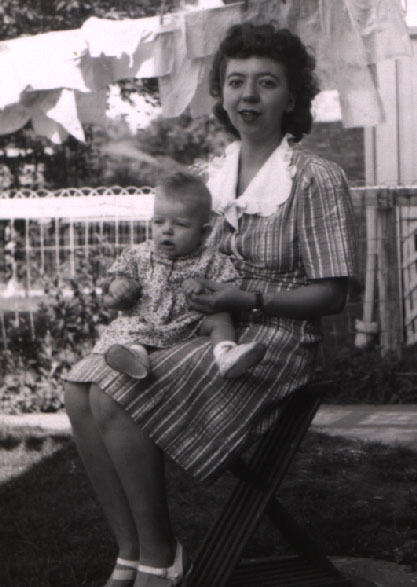
Yesterday I ran into Steve Krysko, one of the veterans I interviewed many years ago. Steve isn't the veteran in the picture; that's Hilding Freeberg, whose widow, Alyce, let me scan pictures from Hilding's photo album after he passed away.

It was kind of sad seeing Steve. He was outside in front of the high rise where he lives on the upper West Side of Manhattan, with a walker, getting a bit of exercise. I asked him how old he is now and he said 90. He said he has a lot of things wrong with him now and that he's nearing the end of his life. He seemed depressed, and complained that while the cost of everything is going up, his income hasn't gone up in five years. He has a pension and Social Security. He worked for American Express after the war until he retired. He said he didn't know what he would do without the excellent health coverage that he got when he retired; I assumed he meant some kind of retiree health coverage from American Express but I didn't ask him to elaborate. He did say he had skin cancer on his head and showed me a scar where it had been removed, and he said they gave him a salve to apply, I think he said the price was $900 for a three-month supply, which was covered. But that and some other medications he's taking, he could never afford otherwise.

He said he was in the hospital recently, and that his defibrillator -- he has one of those implanted -- was acting up. And he said there was a young man in the hospital, he couldn't have been more than 20 or 22, and he had no hands and no legs, and he said imagine having to spend your whole life having somebody dress you and wipe your rear end when you go to the bathroom. He didn't use the words "rear end."

Steve was a rough and tumble kid from Scranton who moved to New York City and then Bridgeport, Connecticut, before he was drafted. I said earlier that I interviewed him but I didn't really interview him; when I showed up to conduct the interview he said he thought about it and he didn't want to talk, but in place of the interview he had written an account of his experiences, and he handed me a manuscript that was 15 to 20 pages. Like a dummy I had my tape recorder with me but I didn't turn it on. And as I looked at the manuscript I would read a short passage from it and he would elaborate. I wish I'd gotten that elaboration on tape but I didn't.

After seeing him yesterday I re-read his story, which he titled "The Finger of Fate." Only half to two-thirds is up on the site, and the rest of the manuscript is, hopefully, in a filing cabinet or a box of papers in my apartment somewhere.

About ten years ago the producers of "The Color of War," a documentary that was on the History Channel, used some passages from my original web site, tankbooks.com, having actors read the passages to illustrate original footage from World War II. They needed pictures and consent forms, so I contacted Steve and he gave me the following pictures:

Steve Krysko


Here's a link to Steve's story, "The Finger of Fate." The language is a little salty, but like I said, before World War II, Steve was a rough and tumble kid from Scranton, not the kindly old gentleman I used to see feeding the squirrels in the grassy areas outside the building where he was a neighbor of mine.

Thursday, February 10, 2011

Why I began recording veterans' stories

Alyce Freeberg

Often I'm asked  how I got started preserving the stories of America's World War 2 veterans.  Like some of the veterans I've interviewed, I have a standard response. However, while listening recently to a 1995 interview with Hilding and Alyce Freeberg, I discovered something a bit more candid and off the cuff.


Alyce Freeberg: This is wonderful (my book "Tanks for the Memories"). I'm very moved by all of this.

Aaron Elson: I think that, I started this, actually I got this little tape recorder when my dad was in the hospital, this very one. I said "I'm gonna go sit down with him and make him tell me his war stories."

Alyce Freeberg: Good.

Aaron Elson: I didn't. I left it home. I went to visit him in the hospital, and then he got out of the hospital, he didn't follow his diet, and then two weeks later he had a heart attack and passed away. But the tape recorder was in a drawer, and I took it with me, I got the newsletter, it was sent to him like five years after he passed away he was still getting it, and I found one and I wrote to Ray Griffin, and he wrote back and said why don't you come to a reunion, so I did. That's when I started doing this, I had the tape recorder, I found three people who remembered my dad. But at the same time, I couldn't believe the stories that I was hearing. And like Andy Schifler said, and this is something I've heard so many times, that they never tell these things to their kids.

Alyce Freeberg: No. He (Hilding) doesn't, either.

Hilding Freeberg: And the only reason my daughter has the stuff is because she was here a month ago or so, and we got talking about the Army, oh I know, what I heard on the radio, on TV, they said that all the people, all the Army personnel that were involved in D-Day are heroes, so I told her, hey, I'm a hero. I think it's D-Day 10, or 6, I don't remember, but I'm a hero, being I was there.

Alyce Freeberg:  Yeah. And that's how she wanted them. She's one of those really interested people, you know.

Hilding Freeberg: So she took it all. Then I had a book of, one of the infantry...

Aaron Elson: The 90th Infantry?

Hilding Freeberg: Well, it wasn't the 90th, the book I had on, but it showed all around where we went also. So she took that. We were attached to the 90th, but I don't have nothing about the 90th, not a thing.

Aaron Elson: But that's one thing that a lot of fellows who were there just don't...

Hilding Freeberg: No, they don't say nothing at all.

Aaron Elson: Even Forrest Dixon said, he's got three grown children, and he's very active, goes to all the reunions, he said one day he was talking with somebody and the other person referred to him as Major, and he said his son said, "Gee, Dad, I never knew you were a major."

Alyce Freeberg: He never mentioned that he was a major.

Aaron Elson: So that's why I started doing this, taking the tape recorder and putting some of this stuff down. Because I think in 25 years it will be good to have as complete as possible a look at one unit. I don't think anybody is doing anything like that from this perspective.

Hilding Freeberg: No, they're not.